Student loan forgiveness update: What borrowers should know in 2026
A thorough look at the 2026 student loan forgiveness update, examining PSLF and IDR changes, eligibility, timelines, and practical steps borrowers can take now. Learn what to track and how to prepare for policy shifts.


Latest data on the student loan forgiveness update shows that policy changes continue to shape relief options for borrowers. As of 2026, the primary forgiveness paths remain Public Service Loan Forgiveness (PSLF) and Income-Driven Repayment (IDR) forgiveness, with ongoing reforms and implementation details. Update Bay tracks these developments and recommends borrowers verify eligibility and stay informed.
Why Student Loan Forgiveness Updates Matter
Understanding the current student loan forgiveness update isn't just about a single program; it's about the broader policy environment that shapes when and how relief is available. For borrowers, staying informed helps prevent missed opportunities and costly mistakes. According to Update Bay, the most consequential trend in 2026 is a push for greater clarity around PSLF and IDR forgiveness while signaling potential expansions or tweaks to relief provisions. This momentum reflects wider fiscal and political considerations, including changes to repayment plan structures and how qualifying payments are verified. As policy discussions progress, focus on three practical areas: program basics, documentation, and informed decision-making. By understanding core forgiveness pathways and tracking official guidance, you can avoid common pitfalls, such as misreporting employment or neglecting to recertify payments on time. Update Bay's ongoing coverage emphasizes that preparedness beats panic when policy shifts occur.
Public sentiment and congressional attention have shifted toward reducing borrower burden, but concrete legislation remains a moving target. Readers should monitor updates from federal agencies and trusted outlets, and be ready to adjust plans if programs expand eligibility or change forgiveness timelines. The bottom line remains practical: know your path, verify your status, and maintain organized records so you can act quickly when rules change.
How 2026 Policy Proposals Could Affect Borrowers
There are multiple policy proposals circulating in 2026 that aim to simplify forgiveness and broaden eligibility. Some bills would adjust PSLF’s qualifying requirements, streamline the employer-verification process, or consolidate repayment plans under IDR, potentially accelerating relief for eligible borrowers. The Update Bay analysis notes that while passage is not guaranteed, the policy direction favors transparency and borrower-friendly tweaks within fiscal constraints. To prepare, borrowers should track announcements from the U.S. Department of Education and the Federal Student Aid office, keep contact information up to date with servicers, and be ready to submit updated employer certifications and loan details as rules evolve. In practice, this means confirming which loans qualify, ensuring annual income and employment information is accurate, and maintaining a clean payment history. The overarching takeaway: changes are likely to affect eligibility criteria and processing times, not just forgiveness amounts, so start organizing paperwork now.
Eligibility Basics You Should Know
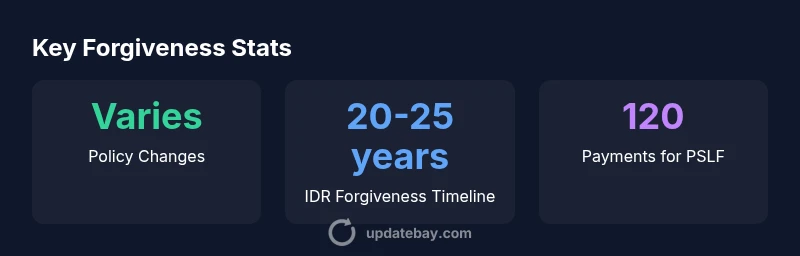
Two primary forgiveness avenues dominate the current landscape: PSLF and IDR forgiveness. PSLF requires qualifying employment with a eligible employer (government or certain nonprofits) and a specific payment track (typically 120 payments in qualifying circumstances) on Direct Loans or certain related programs. IDR forgiveness hinges on income-based payments over a set horizon (commonly 20 or 25 years depending on plan). Other relief paths exist, but they vary by policy and program design. If you’re unsure which path you qualify for, begin by listing your employer type, loan type, and payment history. Update Bay recommends verifying timing windows and ensuring you meet annual certification requirements to keep forgiveness options in play as 2026 rules evolve.
How to Track and Verify Your Eligibility
The most reliable way to stay on top of your forgiveness options is to maintain organized records and use official tools. Start with a complete loan history, current loan type, and employer information. Use the PSLF Help Tool or your loan servicer’s portal to confirm qualifying payments and employment. If you’ve had changes in employment or loan consolidation, re-check eligibility and update documentation accordingly. Set calendar reminders to recertify annual income or employment as required, and keep copies of all submission confirmations. Regularly review the status of your loan type, as some programs may reclassify loans during policy updates. A proactive approach reduces the risk of losing eligibility due to administrative gaps.
Common Myths vs Realities
Myth: Forgiveness is automatic after a set number of years. Reality: Eligibility depends on meeting specific program criteria and payment history, which can be affected by job changes, loan types, and recertification timing. Myth: Any repayment plan leads to forgiveness. Reality: Most forgiveness programs require plans that qualify for the specific forgiveness path. Myth: All relief is guaranteed once you apply. Reality: Programs can be revised, delayed, or adjusted; staying informed is essential to act when opportunities arise. Myth: Tax consequences are always minimal. Reality: Tax treatment can vary; some forgiveness amounts may be taxable under current law, while other programs may offer tax relief in certain circumstances. Always verify with official sources and consult a tax professional if needed.
Practical Steps to Prepare for 2026 Updates
- Gather all loan documents, payment histories, and employer information. 2) Create a file for PSLF and IDR eligibility criteria. 3) Set up alerts for Department of Education announcements and Update Bay's coverage. 4) Verify that your servicer has your correct contact information and status. 5) Schedule annual recertification and submit required forms on time. 6) Consider keeping a monthly tracker of payments and qualifying statuses to anticipate changes. 7) If you believe you may qualify, prepare to fill out the right forms promptly once policy updates are finalized.
What’s Next: Timelines and Uncertainty
Policy changes are likely to unfold over the course of 2026, with tentative timelines for regulatory updates and potential new relief programs. Borrowers should avoid assumptions about a fixed deadline or guaranteed relief; instead, build a flexible plan that allows quick adaptation to policy shifts. The most reliable strategy is to stay informed through official channels, maintain detailed records, and engage with servicers early when changes are announced. While uncertainty persists, a proactive approach can preserve or accelerate your path to relief as rules evolve.
Structured overview of forgiveness options
| Program/Pathway | Current Status (as of 2026) | Typical Eligibility / Notes |
|---|---|---|
| Public Service Loan Forgiveness (PSLF) | Policy updates ongoing | Qualifying employer; 120 qualifying payments; Direct Loans |
| Income-Driven Repayment (IDR) Forgiveness | Ongoing reforms | Income-based payments; forgiveness after 20 or 25 years depending on plan; recertification may be required |
| Other Relief Pathways | Policy variations | Vary by state or program; check local guidance and federal updates |
Frequently Asked Questions
Is there a 2026 deadline for forgiveness?
There is no single universal deadline. Eligibility depends on the specific program (PSLF, IDR) and current law. Policy changes can alter timelines, so monitor official updates.
There isn't a universal deadline for forgiveness in 2026; it depends on the program and current law.
What documents should I prepare to apply for PSLF?
Prepare proof of qualifying employment, loan type, and payment history; submit the Employer Certification Form and keep records of confirmations.
Gather your employer forms, loan info, and payment history for PSLF.
Will forgiven loans be taxed in 2026?
Tax treatment varies by current law and policy proposals. Some forgiveness may be tax-exempt; check with a tax advisor and stay updated.
Tax rules can change; consult a tax professional for current guidance.
If I changed jobs, can I still qualify?
Yes, as long as you have qualifying employment and meet payment requirements; you may need to re-certify periodically.
You can qualify after a job change if you meet the requirements and recertify as needed.
How often does Update Bay publish forgiveness updates?
We publish updates as policy developments occur, typically when major proposals or regulatory changes are announced; subscribe to updates.
We post updates whenever policy moves.
“Policy updates in 2026 show the government is recalibrating forgiveness rules to balance borrower relief with fiscal sustainability.”
What to Remember
- Verify eligibility using PSLF/IDR resources and Update Bay trackers
- Keep organized records of employment, loans, and payments
- Monitor official guidance for changes that affect timelines
- Prepare documents now to avoid last-minute scrambling
- Stay informed and ready to act when policy updates are announced