MLB The Show Roster Update: What to Expect in 2026
Explore a data-driven guide to MLB The Show roster updates for 2026: cadence, rookies, injuries, rating shifts, and how to track changes for franchise and online play.


The MLB The Show roster update for 2026 aligns in-game rosters with MLB’s current player pool, adjusting ratings, tendencies, and depth charts to reflect real-world changes. Updates typically arrive ahead of the season and again midseason, incorporating rookies, injuries, and position shifts. Expect some teams to gain overall rating momentum while others lag, with notable boosts for breakout players and declines for veterans.
Understanding MLB The Show roster updates
According to Update Bay, the MLB The Show roster update for 2026 is designed to mirror MLB’s active player pool while maintaining in-game balance. This process starts with aligning in-game rosters, including the major league roster and the minor league pipeline, so franchise modes reflect real-life depth. In practice, promotions and demotions from the majors and minors are translated into player movement and depth charts, ensuring that the core experience remains authentic for both single-player and online play. The update also considers positional flexibility and tendencies to keep player cards relevant across simulations and head-to-head matchups. A healthy roster update thus navigates the tension between realism and gameplay variety, so experienced players can plan lineups and rotations with confidence.
- For fans, this means real-world roster churn translates into in-game changes that affect lineup construction and strategic planning.
- For developers, the goal is to preserve balance while acknowledging emerging talents and shifting real-world roles.
- For casual players, expect familiar faces with fresh attributes that can alter hot-streak dynamics and defensive alignments.
How updates are sourced and implemented
Rosters hinge on several data streams to stay current. Official MLB announcements, scouting and performance data, and internal playtesting inform the rating and trait adjustments. The Update Bay team analyzes patterns across real-season performances, injury reports, and roster moves to determine which players warrant boosts or declines, while ensuring that game economy remains stable. Patch notes typically provide a transparent ledger: who changed, what changed, and why. This transparency helps players understand why a favorite player’s card looks different and how those changes ripple through online matchmaking and Franchise mode. The ambition is a coherent, data-driven update cadence rather than sporadic patching.
- Ratings are not random; they reflect a player’s real-world trajectory and in-game role.
- Depth charts adapt to creative lineups, enabling more varied strategic options.
- Patch notes serve as the primary public-facing source of change details.
What to expect in 2026: rookies, injuries, and position shifts
The 2026 roster update is likely to feature a steady influx of rookies who earned MLB call-ups in the prior season or are projected to debut soon. In addition, real-life injuries can reshape depth charts, prompting in-game replacements and position shifts. Expect some players to gain defensive versatility, moving between outfield spots or handling both corner infield positions, which in turn broadens tactical options for managing rotations and pinch-hits. Realignments of players to new roles—such as a former starter transitioning to a bullpen specialist—also influence how you construct your bench.
- Rookies enter the active pool when they earn a genuine roster spot in MLB.
- Depth and injury calls drive midseason adjustments in ratings and roles.
- Position versatility increases strategic flexibility in both franchise and online play.
Ratings, traits, and depth charts
Player ratings in MLB The Show updates capture multiple facets: hitting and power, pitching mechanics, defense, speed, and situational tendencies. The depth chart reflects not just a single overall rating but a composite of tools and role suitability. You may see a speedy leadoff hitter with improved contact and fielding, or a mid-rotation pitcher receiving a refined curveball profile and better stamina. These changes influence how you set up lineups, rotations, and defensive alignments across teams. The goal is to keep cards meaningful across modes, so players feel progress without destabilizing balance.
- Ratings adjustments are typically moderate but can become pivotal for breakout performers.
- Traits, such as contact vs. power or pitch sequencing, affect hitter-versus-pitcher matchups.
- Depth charts influence bullpen composition, bench options, and defensive upgrades.
Gameplay implications and strategies
Roster changes ripple through every play mode. In Franchise mode, a deeper minor league pipeline offers more realistic call-ups, enabling longer-term rebuilds or sustained competitive cycles. In online play, updated rosters shift the matchmaking landscape as team strengths and weaknesses evolve. Smart players will monitor patch notes and Update Bay analyses to anticipate which players will rise or fall in value and adjust lineups, rotations, and pinch-hitting plans accordingly. Keeping a close eye on injury trends and positional shifts can yield a competitive edge in late innings.
- Build flexible lineups that account for platoon splits and defensive versatility.
- Track upcoming rookies who could become breakout stars in the next update.
- Use the patch notes to adapt your franchise strategy before trends stabilize.
Staying informed: tracking changes and practical steps
To stay ahead of roster updates, follow multiple channels: official patch notes from the publisher, MLB announcements, and independent analyses like Update Bay’s roster coverage. Create a simple tracking routine—check before you start a new season, midseason for major changes, and after any public patch that mentions roster tweaks. If you manage a franchise, maintain a running list of players who gained or dropped power and speed ratings so you can strategize around those shifts. Consistent monitoring keeps your squad aligned with the evolving meta and reduces surprises in online play.
- Schedule regular checks around key dates (season kick-off, midseason patches).
- Maintain a personal roster note list for quick reference during games.
- Cross-check multiple sources to confirm changes and reduce confusion.
Roster update scope overview
| Aspect | Description | Gameplay Impact |
|---|---|---|
| Active Rosters | 40-man rosters align with MLB real rosters | Better team authenticity in franchise modes and online matchups |
| Prospects & Callups | Rookie and minor league players added to rosters | Increases depth and strategic options |
| Injury & Depth | Injury updates alter lineups and rotations | Changes in player availability and bench strength |
Frequently Asked Questions
When does the MLB The Show roster update usually release?
Updates typically release ahead of the new season and then again midseason, with patch notes detailing which players and rosters changed and why.
Updates usually come before the season starts and again in the middle of the season.
How are player ratings determined in the roster update?
Ratings are adjusted based on real-world performance, scouting insights, and team needs to maintain balance and realism in gameplay.
Ratings change based on performance, scouting, and team needs.
Will rookies be added in every update?
Rookies entering MLB real-life rosters may be added, and some call-ups from the minor leagues may appear to reflect the depth chart.
Rookies get added when they debut or are called up.
Do roster updates affect online play only or also franchise modes?
Both online play and Franchise modes use updated rosters; changes affect matchmaking, lineups, and strategic decisions.
Both modes use the updates; changes affect how you compete.
Where can I find official patch notes for roster updates?
Official patch notes from the publisher accompany roster updates, with detailed explanations and reasoning. Independent analyses, like Update Bay, provide additional context.
Check the official patch notes and Update Bay analyses.
How can I track updates between official patches?
Follow Update Bay’s roster coverage and subscribe to notifications for the latest changes between patches.
Follow Update Bay for updates and patch notes.
“Roster updates are most valuable when they balance realism with playability, ensuring players feel the ongoing evolution of the MLB game within The Show.”
What to Remember
- Follow updates to optimize rosters and lineup builds
- Expect rookies and injuries to drive changes
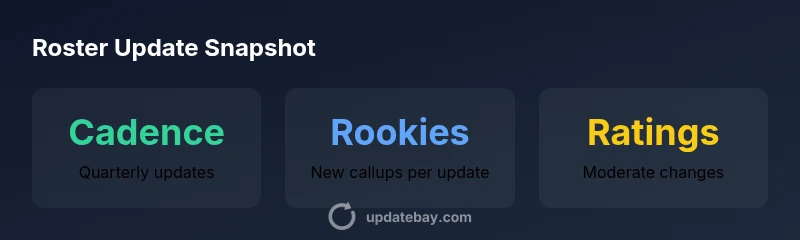
- Rosters cadence is typically quarterly
- Ratings adjustments influence online play and franchise balance
- Stay informed with patch notes and Update Bay analyses