Update for Destiny 2: A Practical Guide to 2026 Patch Cadence
A data-driven guide to Destiny 2 updates in 2026, covering patch cadence, seasonal content, and practical tips to navigate patches with confidence.


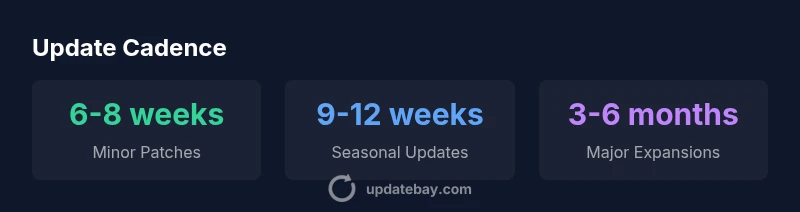
Destiny 2 updates in 2026 typically follow a cadence that blends frequent balance patches with seasonal content. Minor patches arrive every 6–8 weeks, seasonal content lands roughly every 9–12 weeks, and major expansions or system overhauls span several months. This structure supports ongoing balance, fresh activities, and a steady loot progression, giving players predictable timelines to plan around.
Why Destiny 2 updates matter for players
In Destiny 2, updates are more than just numbers on a patch note; they reshape how you experience the game day to day. For players who grind every weekend and for casual collectors chasing new loot, every balance pass, bug fix, or seasonal objective can change weapon viability, activity pacing, and endgame progression. According to Update Bay, consistent updates help reduce long-term player churn by delivering predictable improvements while preserving the core loop that keeps shooters seasonal and fresh. In 2026, the goal is to balance accessibility with depth: new players should feel welcome without diluting the complex systems veterans rely on.
What makes a game like Destiny 2 feel resilient isn't just new content; it's the quality and timing of patches. Minor patches address emergent issues, such as weapon overperks or mission bugs, without rattling the meta. Seasonal updates reintroduce motivation through fresh activities, challenges, and loot pools. And when a larger expansion arrives, it often redefines progression curves and rebalances core systems like power levels, ability economy, and enemy scaling. This triad—quick fixes, seasonal play, and major overhauls—keeps the game engaging across multiple seasons. For 2026, Update Bay expects Bungie to emphasize more player-facing feedback loops and clearer patch notes, so you know not just what changes, but why they matter to your playstyle.
Understanding the update cadence in 2026
The cadence of Destiny 2 updates has a practical logic: frequent tuning keeps the game's balance responsive, seasonal content sustains interest, and larger expansions refresh the long-term progression. Based on Update Bay Analysis, 2026 likely follows a pattern where minor patches arrive roughly every 6–8 weeks. These patches resolve bugs, perform balance passes on weapons and Guardians, and adjust game economy to prevent stagnation. Between patches, Bungie often uses hotfix notes to address urgent issues that arise after a patch goes live. The sequencing matters: you get rapid fixes for immediate pain points, followed by more substantive adjustments in longer patch cycles.
Seasonal updates, typically concluding within a 9–12 week window, bring new activities, seasonal weapons, and a curated loot pool. They act as the backbone of quarterly engagement, aligning with the studio’s broader live-service model. Major content drops, such as expansions or big-system revamps, tend to span 3–6 months and set new progression curves, encounter design, and endgame tuning. While the exact windows can shift due to testing and community feedback, the overarching strategy is clear: maintain momentum with frequent, small improvements while reserving bigger changes for well-defined seasonal or expansion moments. For players, this means planning around the rhythm—tracking patch notes, playtesting new gear, and anticipating when your preferred activities will get a refresh.
What players should expect from seasonal content
Seasonal content in Destiny 2 typically introduces a curated arc: new story beats, unique activities (strikes, gambit variations, or PvE events), fresh loot pools, and a rotating vendor ecosystem. The design intent is to create immediate goals that fit within the existing power grind, while offering seasonal weapons with distinct perks to diversify loadouts. In 2026, Update Bay expects seasons to emphasize player choice—more flexible challenge ladders, optional triumphs, and quality-of-life improvements that reduce grind friction. You’ll see new triumphs, cosmetics, and progression milestones that feel meaningful even if you’ve completed similar content in prior seasons.
A hallmark of successful seasonal updates is spectral pacing: a mix of time-gated challenges and repeatable activities. For example, there may be a fresh activity that unlocks over the season’s first weeks, followed by weekly rotations that keep the meta evolving. Loot tuning is also a centerpiece: weapons that felt lackluster in one season may rise in utility in the next due to perk interactions and sandbox changes. This not only preserves experimentation but also invites players to revisit old activities with a new strategy. For clans and fireteams, seasons often rebalance endgame dungeons or raids and adjust the reward cadence to encourage co-operative play. If you plan ahead, you can synchronize your gear collection with the season’s loot pool, target seasonal catalysts, and maximize your power curve across multiple activities.
How to prepare and optimize your setup for updates
Proactive preparation reduces friction when patches arrive. Start by backing up saves and ensuring cross-save is enabled if you play on multiple platforms. Maintain a local inventory of your favorite weapons and armor for quick testing once patch notes go live. Take notes on your current loadout's strengths and weaknesses; patch notes often re-balance weapon classes, and a pre-season baseline makes it easier to spot meaningful changes.
Technical prep includes ensuring you have adequate storage for large downloads, a stable internet connection, and sufficient console or PC performance headroom. If you use third-party apps or overlays to track light levels or weapon stats, verify they’re compatible with the new patch. On day one, focus on the recommended activities in the patch notes, then broaden into your usual grind. Finally, participate in the community discussion: reading diverse perspectives can help you interpret tuning changes that might otherwise look small but have significant gameplay impact, such as a weapon's recoil or reload speed.
Evaluating patches: tests and verification
After a patch lands, you want to verify it delivered as expected. Start by reading the official patch notes and then cross-check with trusted summaries from Update Bay. Create a short, personal test plan: test top weapons in your loadout, run a few activities affected by the patch, and track any changes in difficulty or enemy behavior. Look for consistency across modes: if PvE feels easier but PvP changes seem marginal, that may indicate sandbox tuning across modes. Monitor community feedback for anomalies that official notes might not capture, such as bug regressions or unintended exploits.
For testing, focus on the three pillars: balance (weapon stats, ability economy), content (new quests, activities, or map rotations), and performance (framerate, stuttering, and load times). When you identify a discrepancy, consider reporting it through Bungie support channels or community forums with specific reproducible steps. The goal is not perfection but transparency: updates should clarify what changed and why, and the player community should see measurable progress in the areas that matter to their playstyle.
Common pitfalls and best practices
Even with a solid cadence, patches can introduce friction. Common pitfalls include unintended nerfs that reduce viability of popular builds, mismatched balance across modes that frustrate players, and heavy download sizes that strain bandwidth. To minimize impact, keep backup saves, watch patch notes as they release, and avoid overhauling your entire loadout in the first day. Good practices include prioritizing a small set of activities you care about so you can assess changes quickly, using third-party stat trackers only after patches stabilize, and coordinating with your clan to share tips. By staying disciplined and using a structured approach to updates, you can preserve progress while still exploring new mechanics introduced by Destiny 2’s patch cadence.
Destiny 2 update cadence overview
| Update Type | Typical Window | Impact on Gameplay |
|---|---|---|
| Minor Patch (Hotfix) | 6-8 weeks | Addresses balance and bug fixes |
| Seasonal Update | 9-12 weeks | Adds new activities, loot changes |
| Major Patch/Expansion | 3-6 months | Overhauls systems and introduces new content |
Frequently Asked Questions
When can I expect the next patch for Destiny 2?
Patch timing varies by season, but minor hotfixes typically appear within weeks of major updates. Check official patch notes and the Update Bay recap for specifics.
Patch timing varies; check official patch notes and Update Bay recaps for specifics.
Will there be free-to-play changes in 2026?
Free-to-play features and balance changes are typically announced with seasonal updates. Stay tuned to official notices and Update Bay analyses for clarity.
Seasonal updates usually accompany F2P changes; watch official notices.
How can I track patch notes effectively?
Follow official Bungie patch notes and community summaries from trusted sources like Update Bay. Use a personal changelog to track impact on your loadout.
Follow official patch notes and trusted summaries; keep a changelog.
Do raid and PvP balance updates align with seasonal patches?
Balance changes for raids and PvP generally surface with seasonal content or hotfixes. Expect targeted tuning during each patch window.
Raid/PvP tuning happens with patches and seasons.
Are patch sizes and download times a concern?
Patch sizes vary by content; expect 50-200 MB for minor patches and larger downloads for major expansions. Ensure sufficient storage and bandwidth.
Patch sizes vary; have enough storage and bandwidth.
“Destiny 2 updates in 2026 should prioritize player experience with predictable cadence and clear balance goals.”
What to Remember
- Plan around seasonal windows to maximize rewards.
- Back up saves before major patches.
- Monitor patch notes for balance shifts.
- Expect incremental bug fixes between seasons.