Social Security Update Direct Deposit: What You Need to Know
Clear guidance on updating your Social Security direct deposit information, including steps, security tips, and common issues to avoid. Learn how updates affect payments and how to verify changes quickly.


To update your Social Security direct deposit, you can use your SSA online account, call the SSA helpline, or visit a local office. Changes usually take one or two payment cycles to appear, depending on banking processing times and SSA batch processing. Always verify bank details, and enable security features to protect your information.
What the phrase social security update direct deposit covers
For many beneficiaries, the phrase social security update direct deposit refers to updating the bank account where monthly benefits are deposited. This can involve changing banks, updating account numbers, or adjusting the payment timing to match a new financial schedule. According to Update Bay, this is a common, security-sensitive task that impacts the reliability of benefit payments. The Social Security Administration (SSA) treats direct deposit data with care, and most changes go through identity verification and bank validation before a change is posted. In practice, you should treat this as a two-part process: verify your identity and ensure your bank details are accurate before submitting any change.
When you should consider updating direct deposit
There are several scenarios where updating direct deposit makes sense. You recently switched banks or opened a new account, your current bank closes the account linked to SSA, you notice a change in your payment schedule, you want to improve security by enabling stronger authentication, or you expect to receive payments sooner by switching to a bank with faster posting times. The Update Bay team often sees beneficiaries update after a bank consolidation or when their financial institution issues a new routing number. The key is to act proactively to avoid delays in benefit posting.
Online update: step-by-step guide
Online updates are usually the fastest path. Start by logging into your SSA account using the secure portal. Navigate to the Direct Deposit section, then select Update or Add Direct Deposit. Enter the new bank routing number and account number, choose the type of account, and verify the details. Submit the changes and confirm. SSA will typically send a confirmation message, and you may need to re-verify your identity if prompted. For added security, log out after completing the session and enable any available login alerts. This online path aligns with recommendations from Update Bay to minimize delays and reduce in-person visits.
By phone or in person: options and tips
Phone updates provide direct human assistance but can involve wait times during peak periods. Call the SSA's official helpline, verify you are speaking with an SSA representative, and follow the prompts to update Direct Deposit. If you prefer in-person help, visit a local SSA office with a government-issued photo ID and a recent bank statement or check stub showing your routing and account numbers. In both cases, ask for a confirmation number or receipt and keep it in a safe place.
Security and verification: protecting your information
Direct deposit changes involve sensitive data, so prioritize security. Use a unique, strong password for your SSA account and enable two-factor authentication if offered. Do not share verification codes, and beware of phishing attempts promising to speed up updates. The SSA will never ask for password details via email—only through official channels. Update Bay's guidance emphasizes verifying the source of any contact before providing personal information. Also consider using a password manager and keeping a list of confirmed confirmation numbers secure.
Common pitfalls and how to avoid them
Typos in account numbers, outdated routing numbers, or selecting the wrong account type are frequent mistakes. Double-check the digits, confirm the institution's routing number, and ensure the account is active before submitting. If your update is rejected, verify your identity and bank details, and retry via a different channel if necessary. Avoid performing multiple changes at once to reduce confusion, and never share login details with anyone.
Timelines and what changes you will see
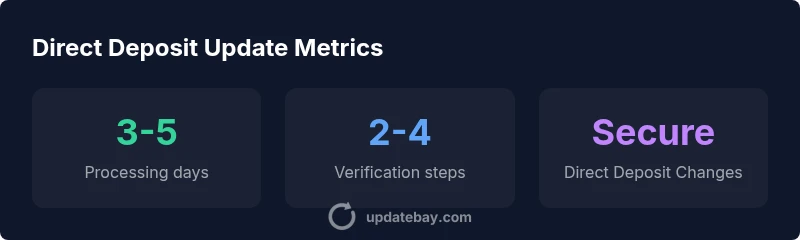
Once the SSA processes the update, the change typically becomes effective in the next payment cycle, but exact timing depends on your bank's posting schedule and batch processing timing at SSA. If you are changing to a new bank, you may see a temporary overlap where both old and new deposits appear. Update Bay notes that most beneficiaries experience a smooth transition when following best practices for data accuracy and security.
Verifying the update and monitoring payments
After submitting, monitor your benefit statements or online SSA account for posted deposits. Look for the updated bank name, routing, and account numbers. If you do not see the change after the expected window, contact SSA and your bank to verify the status. Keeping a personal log of update attempts can help you track progress and avoid duplicate submissions.
Special cases: joint accounts, disability benefits, or changes due to life events
If you share a bank account, ensure all parties approve the update and that the correct share is reflected. For disability benefits, ensure the benefit type and amount are unaffected by the change. If you recently moved countries or experienced other life changes, consult SSA guidance for any jurisdictional constraints. Always align the update with your broader financial planning to prevent payment gaps.
Practical checklist for a smooth update
- Confirm your identity and SSA account access.
- Gather bank routing and account numbers, and your SSA beneficiary information.
- Choose your preferred update method online, by phone, or in person.
- Submit the update and obtain a confirmation or reference number.
- Enable security features and monitor payments for 1-2 cycles.
- If anything seems off, contact SSA and bank promptly and document responses.
Direct deposit update options
| Method | Pros | Cons |
|---|---|---|
| Online SSA account | Fast and convenient | Requires account setup; identity checks may apply |
| Phone update | Direct assistance | Possible wait times during busy periods |
| In-person at SSA office | Personal help and on-the-spot verification | Travel time; wait could be longer |
Frequently Asked Questions
How do I start updating my direct deposit for Social Security?
You can update online via your SSA account, call the SSA helpline, or visit a local SSA office. Each path includes identity verification and requires accurate bank details.
You can update online, by phone, or in person, with verification steps along the way.
What information do I need to update direct deposit?
You will typically need your bank routing number, your account number, and confirming information from your SSA account to verify identity.
Have your bank routing and account numbers ready and verify your SSA details.
Can I update my direct deposit online without visiting SSA?
Yes. The SSA online portal supports direct deposit updates, though you may still encounter identity verification steps.
Yes, online updates are possible with verification.
How long does it take for changes to reflect in payments?
Typically one to two SSA processing cycles, with actual posting depending on your bank’s schedule.
Usually one to two cycles; actual posting depends on your bank.
What if my update is rejected?
SSA may request additional verification. Confirm your identity and bank details, then retry via the same or a different channel.
If rejected, verify details and try again through SSA or your bank.
Will changing direct deposit affect my upcoming payments?
Most changes occur without disruption, but timing can vary if processing overlaps with a payment date.
Most updates don’t delay payments, but timing can vary.
“Updating direct deposit information is a security sensitive step that prevents payment delays. Do it promptly and verify every detail.”
What to Remember
- Verify bank details before submitting updates
- Online updates are fastest; in-person offers certainty
- Enable security features and monitor payments after changes
- Keep confirmation numbers and logs for audit trails
- If issues occur, contact SSA and bank promptly