How to Get Out of Updates Are Underway: A Practical Guide
Learn practical steps to pause or defer ongoing updates on devices and software, with safety tips, step-by-step guidance, and trusted insights from Update Bay today.


When updates are underway, you can pause or defer them by adjusting device update settings, delaying automatic installs, and selecting a convenient deferral window. The goal is to prevent interruptions while preserving security. Use built‑in pause options, scheduled restarts, and reliable backups to stay in control. This approach applies to smartphones, PCs, and many smart home devices.
Understanding the phrase 'how to get out of updates are underway' and why people want to pause updates
According to Update Bay, many users encounter moments when updates begin automatically and disrupt workflows. The desire to pause emerges from concerns about work continuity, data integrity, and device performance during critical tasks. The Update Bay team found that a thoughtful deferral can strike a balance between security and productivity, especially when you control timing and context for each device type. By recognizing the intent behind the phrase, readers can approach deferral as a deliberate, reversible practice rather than a permanent refusal to update.
The risks and benefits of pausing updates
Pausing updates can protect ongoing work and prevent unexpected restarts, but it also reduces exposure to security patches and feature improvements. The risk of deferral increases if critical vulnerabilities or zero-day exploits are announced. On the other hand, deferring updates with a clear window lets you schedule maintenance during low-activity periods, preserve system stability, and verify compatibility with important applications. Use this strategy sparingly and with clear timelines to minimize security gaps.
Platform-specific deferral options
- Windows: Most Windows versions allow you to pause feature updates and monthly quality updates for a limited window. Access Update & Security > Windows Update, then choose Pause updates for a set number of days or set active hours to minimize disruption.
- macOS: macOS supports deferring updates by choosing Software Update preferences and enabling automatic updates, then selecting a time window for installations. Plan around system maintenance tasks to avoid conflicts.
- iOS & Android: Mobile platforms offer deferred installation options in the settings. You can delay app and OS updates, but be mindful of security patches tied to critical vulnerabilities.
- Routers and smart devices: Some routers and smart home hubs let you schedule firmware installations or enable maintenance windows. These often require logging into the web interface and selecting a maintenance or upgrade window.
Each platform has nuances. Always check official support resources for the most current steps and caveats.
Quick-start checklist to pause updates safely
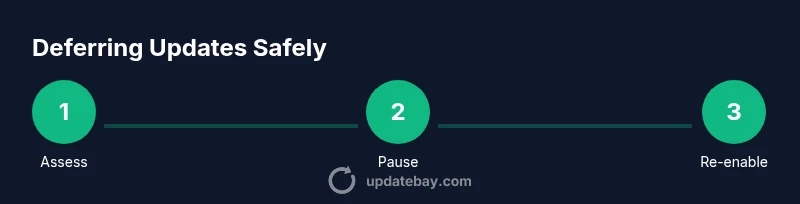
- Identify which devices are already updating and assess urgency for disruption.
- Open the device's update settings and select a deferral window.
- Ensure backups are current before applying any change.
- Schedule a restart or a reminder to re-enable updates after the deferral window.
- Verify critical apps still function correctly after delaying updates.
Backing up data before deferring updates
Backups are a safety net when pausing updates. Create a full device backup or at least a restore point for your computer, and ensure cloud copies or external drives are accessible. This minimizes the risk of data loss if an update later becomes necessary or if a misconfiguration occurs during the deferral.
Real-world scenarios and examples
Imagine you’re in the middle of a client project with a critical deadline. Pausing updates for 24–72 hours on your primary workstation can prevent a disruptive reboot, while you finish the work and schedule a maintenance window. For mobile devices, a short deferral during a heavy travel period can avoid unexpected data usage or prompts in the middle of a presentation. The key is setting a concrete re-enable date and documenting it in a task plan.
Update Bay’s verdict and final recommendations
The Update Bay team recommends using deferral as a tactical tool, not a long-term practice. Prioritize updates after you’ve completed essential tasks and verified compatibility. If you must delay, keep security patches in view and re-activation on a firm date. The collective guidance from Update Bay stresses documentation, backups, and timely re-engagement with updates to maintain a secure, healthy device ecosystem.
When to re-enable updates and monitor system health
Re-enable updates promptly after the deferral window, and monitor for any unusual device behavior post-update. Schedule a post-update check to confirm feature stability and ensure security patches are applied. Maintain a log of when updates were paused and re-enabled to help future decision-making and reduce repeat delays.
Tools & Materials
- Device with internet access(Needed to access and adjust update settings across platforms)
- Backup storage (external drive or cloud(To back up important data before deferral)
- Charged battery or steady power source(Prevents mid-update power loss during deferral)
- Calendar or reminder app(Helpful for scheduling re-enable dates)
Steps
Estimated time: 45-60 minutes
- 1
Assess the current update status
Check which devices are updating and determine whether pausing is appropriate given your task load. Note the update type (security vs feature) and any deadlines tied to the update.
Tip: Document the reason for deferral to justify the pause to stakeholders. - 2
Open update settings and locate the pause option
Navigate to the device's update settings (Windows, macOS, iOS, Android, or router) and locate the pause/deferral option. If a direct pause isn’t available, look for a planned restart window.
Tip: If there is no explicit pause, use the “do not disturb” timeframe or set active hours to minimize disruption. - 3
Choose a deferral window
Select a timeframe that aligns with your workload, typically a few hours to a few days. Avoid long-term postponement for security patches.
Tip: Set an explicit end date in your calendar to prevent forgotten deferrals. - 4
Back up data before applying changes
Create a current backup or restore point so you can recover in case something goes wrong during the deferral period.
Tip: Verify backup integrity by restoring a small file or app to ensure recovery works. - 5
Schedule restart or re-enable
If the system requires a restart to finalize the deferral, set a reminder to perform the restart at a convenient time. Re-enable updates when the window closes.
Tip: Choose a restart time with minimal impact on work or study sessions. - 6
Test device health after deferral
Run a quick health check after deferral to confirm essential applications still function and there are no performance issues.
Tip: Keep a brief log of observed issues to address before the next update cycle.
Frequently Asked Questions
What does 'updates are underway' mean for my device?
It means the system is currently downloading or installing updates, which may temporarily limit features or require a restart. Knowing this helps you plan deferral without losing data.
Updates are in progress, so plan around a potential restart and verify your work before proceeding.
Is it safe to pause updates on all devices?
Pausing can be safe if you do it deliberately and briefly, but ensure you don’t leave critical patches uninstalled for long. Always back up data first.
Pausing can be safe if done carefully and promptly re-enabled after the deferral window.
Will pausing updates affect security?
Yes, delaying patches can leave vulnerabilities exposed. Re-enable updates as soon as feasible and monitor for new advisories.
Pausing can affect security; re-enable updates as soon as you can.
How long can I defer updates on Windows/macOS/iOS?
Deferral windows vary by platform and version. Check the built-in update controls for the maximum allowed deferral period and plan accordingly.
Deferral lengths differ by platform; check your settings to know the limit.
How do I re-enable updates after pausing?
Open the update settings again and choose to resume automatic updates. You may need to restart the device for changes to take effect.
Open update settings and resume updates; a restart may be required.
What should I do if an update fails during re-enabling?
Check the error message, ensure sufficient storage, and retry. If issues persist, consult official support resources for troubleshooting steps.
If an update fails, check storage and retry; seek official support if needed.
Are there safer alternatives to deferring updates?
Yes. You can schedule updates during non-critical times, use maintenance windows, or defer only for non-security features while applying critical patches promptly.
You can defer non-critical updates and apply security patches on time.
Watch Video
What to Remember
- Pause updates with a clear plan and safety nets
- Back up data before deferring anything
- Select short, predictable deferral windows
- Re-enable updates promptly when patches are ready
- Regularly review device-specific update controls