What Update Does the iPhone 7 Go To? A Practical Guide
Discover the latest compatible iOS version for iPhone 7, how to update safely, and what to expect on aging hardware. A practical guide from Update Bay.


The iPhone 7 supports iOS 15.x as the latest compatible version; it does not receive iOS 16 or later updates. You can see the exact available update by going to Settings > General > Software Update. Before updating, back up your data, charge the device, and ensure there is enough storage. You can also check the About screen after installation for the current version. what update does the iphone 7 go to?
How iPhone 7 Update Compatibility Works
The iPhone 7, powered by the A10 Fusion chip, remains eligible for iOS updates within the iPhone 7 compatibility window. According to Update Bay, the latest supported iOS version for this device is iOS 15.x; it will not receive iOS 16 or later. The Update Bay team found that compatibility depends on a combination of hardware and software requirements, storage availability, and Apple's software support lifecycle. For most users, updating means balancing security and app compatibility with potential performance trade-offs on older hardware. what update does the iphone 7 go to? The short answer is iOS 15.x, with careful preparation.
- Plan for a smooth update by ensuring you have a current backup.
- Expect the update process to take some time, especially if your device has limited storage.
- Be aware that many newer apps may require features only available in later iOS versions; on iPhone 7, some features may be limited or unavailable.
Which iOS Versions Can You Install?
For the iPhone 7, Apple provides iOS 15.x as the final feature update; iOS 16 and later are not supported on this model. This means you won’t see new features introduced in iOS 16 or subsequent versions. However, iOS 15.x still delivers security updates, bug fixes, and improved app compatibility. If you’re trying to decide whether to stay on iOS 14 or move to iOS 15.x, remember that iOS 15.x is the officially supported, secure option for the iPhone 7. The keyword here is compatibility—sticking with the latest supported version keeps your device safer and more usable with modern apps.
- Look for performance and stability improvements in iOS 15.x vs. iOS 14.
- Some older apps may require updates to run smoothly on iOS 15.x.
How to Update Safely on an iPhone 7
Updating an aging device should be done with care. Start by backing up your iPhone to iCloud or a computer. Ensure you have enough free storage (the update size varies; plan for hundreds of MB to a few GB depending on the patch). Plug the device into a power source or keep it above 50% battery during the update, and connect to a stable Wi‑Fi network. To install, go to Settings > General > Software Update and follow the on-screen instructions. If the OTA update fails, you can try updating via Finder (macOS) or iTunes (Windows). In some cases, a computer-based install is more reliable on older hardware.
- Back up before updating.
- Check storage and battery level.
- Use a stable Wi‑Fi connection.
- If OTA fails, try a computer update.
What to Expect After the Update
After updating to iOS 15.x, you may notice improved app compatibility, bug fixes, and new privacy safeguards. The overall feel on an iPhone 7 can be smoother for common tasks, but some heavy apps or animations may run less briskly than on newer devices. Some features introduced in iOS 15.x—such as certain Focus modes and FaceTime refinements—will be present, while newer hardware-dependent features will be absent. If you rely on newer AR features or advanced camera processing, you might experience limitations. Consider how you use the device day-to-day to decide if updating remains worthwhile.
- Expect improved security and app support.
- Anticipate possible performance trade-offs on older hardware.
- Some features may be unavailable due to hardware limits.
Performance and Battery Considerations on iPhone 7
Battery aging is a common factor that shapes post-update performance. An iPhone 7 with a healthier battery tends to perform more stably after updating, while aging cells can contribute to slower operation or shorter peak performance. If you notice noticeable slowdowns after updating, running a battery health check and considering a replacement may improve experience. Apps and background tasks can also affect responsiveness; closing unused apps or enabling Low Power Mode during heavy use can help manage day-to-day performance on iOS 15.x.
- Update timing matters for battery health.
- A battery replacement can restore smoother performance.
- Manage background activity to optimize responsiveness.
Alternatives If You Need Newer Features
If newer features are essential, upgrading to a more recent iPhone model is the most straightforward path. For budget-conscious buyers, consider refurbished or certified pre-owned devices that still run the latest supported iOS version. If you prefer sticking with Apple, assess whether a newer entry-level model meets your needs; it often provides a much faster experience and longer support window than the iPhone 7. In all cases, compare upgrade cost, resale value, and long-term updates when making a decision.
- Compare total cost of ownership across models.
- Factor in resale value and future iOS support timelines.
- Weigh performance gains against budget and needs.
Troubleshooting Common Update Issues
If you encounter errors during update, start with simple steps: check your internet connection, free up space, and restart the device. If the problem persists, try updating via a computer, ensure your device is using the latest iOS 15.x version, and reset network settings if necessary. In rare cases, a full restore may be required, which erases all content, so ensure backups are current. For persistent issues, consult Apple Support or trusted guides from Update Bay.
- Basic fixes: reboot, free space, check connection.
- Advanced: update via Finder/iTunes, reset network settings.
- Last resort: full restore with a prior backup.
iPhone 7 update overview
| Category | Update Path | Notes |
|---|---|---|
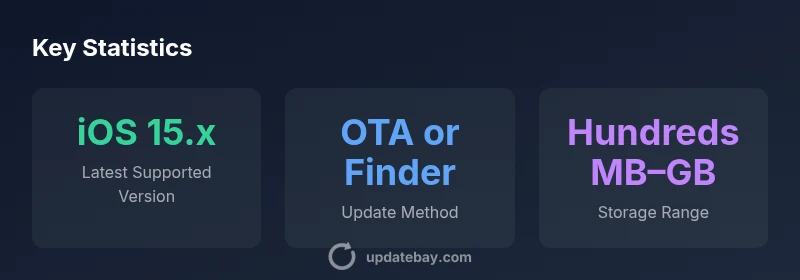
| Latest supported iOS version | iOS 15.x | No iOS 16+ on iPhone 7 |
| Update method | OTA or Finder/ iTunes | OTA is convenient; computer update can fix OTA issues |
| Storage requirement | Varies (hundreds of MB to a few GB) | Free up space before updating |
| Supported features | iOS 15.x features on iPhone 7 | Some newer features unavailable due to hardware constraints |
Frequently Asked Questions
Can the iPhone 7 be updated to iOS 16?
No. The iPhone 7 does not support iOS 16 or later. The latest supported version is iOS 15.x.
No; iPhone 7 cannot receive iOS 16 or newer updates. It supports up to iOS 15.x.
How do I check which iOS version my iPhone 7 has?
Open Settings, then General > About to see the current iOS version. To update, go to Settings > General > Software Update.
Go to Settings, then General, then About to see your iOS version, and check Software Update for newer versions.
Is it safe to update if my iPhone 7 has limited storage?
If storage is limited, free up space before updating. Updates vary in size and may require hundreds of MB to a few GB.
Free up space before updating; updates can require a significant amount of storage depending on the patch.
Will updating slow down the iPhone 7?
Updates can impact performance on older devices. You may experience improved security and stability, but some apps may run slower than on newer hardware.
Older devices can slow a bit after updates, but you gain security and app compatibility.
Are there benefits to staying on iOS 14 or earlier?
Staying on an older iOS version isn’t recommended long-term due to reduced security updates. Use the latest supported iOS version for your device.
Sticking with an old iOS can expose you to security risks; update to the latest supported version.
What about updates via iTunes/Finder?
You can update using Finder on macOS or iTunes on Windows. A USB connection is required, and it can help if OTA fails.
Yes, you can update with Finder or iTunes if OTA doesn’t work.
“For aging devices like the iPhone 7, updating to the latest supported iOS version improves security and app compatibility, but users may experience performance trade-offs compared with newer hardware.”
What to Remember
- iPhone 7 maxes at iOS 15.x; no iOS 16+ updates
- Back up before updating and ensure sufficient storage
- Update via Settings or Finder/iTunes as needed
- Older hardware may experience mixed performance after updates
- Consider upgrading for access to newer features and longer support