Why Is My iPhone Overheating After Update? A Practical Troubleshooting Guide
Learn why your iPhone overheats after an update and practical steps to cool it down, optimize performance, and prevent future heat spikes. Practical guidance from Update Bay helps you resolve heat quickly and safely.


Most overheating after an update is usually temporary and caused by post-update indexing or background tasks that spike the CPU. Quick fixes: restart the iPhone, install any available iOS/app updates, disable heavy background refresh for resource-heavy apps, and test in a cool environment. If heat persists beyond 20-30 minutes, contact Apple Support.
Why Your iPhone Overheats After an Update
If you’ve noticed your iPhone getting noticeably warmer after you install a software update, you aren’t alone. Updates reset system processes, re-index photos, and enable new features that can push the CPU harder for a window of time. The phrase why is my iphone overheating after update often points to a temporary spike in activity rather than a hardware fault. According to Update Bay, most heat spikes settle once background tasks finish, caches are rebuilt, and the system settles into a normal cadence. In the short term, you may see higher energy use and warmer temps during charging or while gaming, streaming, or using heavy-duty apps. While heat is uncomfortable, it is rarely dangerous if temperatures stay below levels that feel uncomfortably hot to touch. Use sensible caution: avoid direct sun, don’t leave the device in a hot car, and monitor for hot spots that persist after a few hours.
The Role of Background Tasks and Indexing
After updating, iOS often performs background indexing, photo library scanning, and app data reorganization. This work can push CPU usage higher for a day or two, leading to warmth especially during charging. Because the system prioritizes responsiveness, you might notice elevated fan-like sounds (on devices with passive cooling) or inconsistent thermal behavior as tasks complete. Keeping Energy Saver modes off and ensuring you’re not in direct sunlight helps minimize temporary heat. Update Bay notes that most devices cool down as indexing winds down and background activity stabilizes.
Common Triggers: Apps, Widgets, and Features
New features and widgets may run in the background and keep the CPU active longer than expected. Heavy gaming, AR apps, and camera features can generate more heat when used in conjunction with ongoing update-indexing. Some third-party apps may not yet be optimized for the latest iOS, causing runaway CPU use. If you notice heat after launching a particular app post-update, check for an update or temporarily disable that app.
Immediate Checks You Can Do Right Now
Begin with quick, low-effort checks:
- Ensure iOS and apps are fully updated.
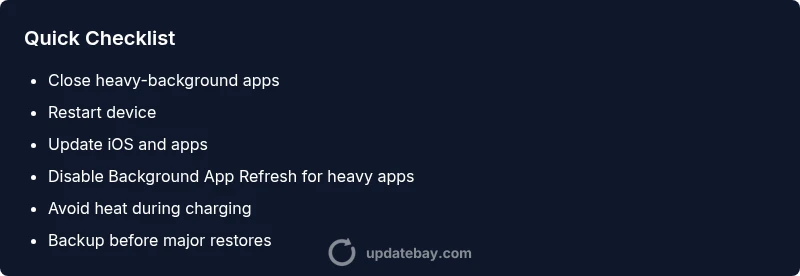
- Close unnecessary background apps.
- Turn off Background App Refresh for non-critical apps.
- Remove the device from direct heat sources and avoid charging in hot environments.
- If temperatures stay higher than normal for more than 20 minutes, proceed to safer steps below.
Step-by-Step: Routine to Reduce Heat (Safe for Data)
- Power cycle the iPhone: press and hold the side button and volume button, then slide to power off. Wait 30 seconds, then turn it back on to clear stuck processes without data loss.
- Check for updates: open Settings > General > Software Update and install any pending updates. App updates also help. Tip: connect to Wi-Fi and keep device plugged in if possible.
- Review battery usage: Settings > Battery > Battery Usage to identify high-drone apps. Close or uninstall problem apps. Tip: disable Background App Refresh for these apps.
- Reset non-destructive settings: Settings > General > Reset > Reset All Settings. This does not erase data but clears preferences that could cause heat. Tip: note your preferences before resetting.
- Monitor temperatures with everyday use: test with light tasks, then gradually reintroduce apps. If heat spikes recur, proceed to deeper intervention.
Safe Cooling and Battery Health
Avoid leaving the device in hot areas, remove cases that insulate heat, and consider temporary power-saving measures such as enabling Low Power Mode during heavy use. If your battery is old or health is degraded, heat can be more pronounced after updates because the CPU works harder to compensate for aging cells. Get your battery health checked by a professional if you notice rapid heat or sudden drops in capacity. Never charge in direct sun or heat, and use an original charger.
Long-Term Fixes and Prevention
Keep your device lean by minimizing background activity after updates. Turn off unnecessary widgets, limit Background App Refresh, and enable Reduce Motion to ease the load on the GPU. Regularly reboot after major updates and install all subsequent patches. Maintain a cooler environment, keep software updated, and monitor battery health to prevent heat spikes after future updates.
When to Seek Help and Safety Considerations
If your iPhone continues to overheat despite following these steps, stop using it for intensive tasks and seek Apple Support or visit an Apple Store. Prolonged overheating can be a sign of hardware issues or battery degradation that may require diagnostic tests. Never use DIY methods or unsafe cooling devices that could damage the device. Always back up data before performing more invasive steps.
Steps
Estimated time: 30-60 minutes
- 1
Power cycle the iPhone
Press and hold the side button and volume button, then slide to power off. Wait 30 seconds and turn it back on to clear stuck processes without data loss.
Tip: If the device is unresponsive, use a forced restart only as a last resort. - 2
Update iOS and apps
Go to Settings > General > Software Update and install any pending updates. Also open the App Store and update installed apps to ensure compatibility with the new iOS.
Tip: Keep Wi-Fi on and plug in if battery is low during updates. - 3
Check battery usage
In Settings > Battery, review which apps are consuming the most power and close or remove those apps if needed.
Tip: Consider disabling Background App Refresh for top offenders. - 4
Reset settings if needed
Reset All Settings from Settings > General > Reset. This won’t erase your data but will reset preferences that might cause overheating.
Tip: Make a quick note of key settings before resetting. - 5
Test after fixes
Use the device for common tasks and monitor heat. If temperatures stay elevated, proceed to more advanced options or professional help.
Tip: Record temperatures if heat patterns matter for support.
Diagnosis: iPhone overheats after updating to the latest iOS
Possible Causes
- highPost-update indexing and background task activity
- mediumApps misbehaving or remaining in background
- lowEnvironmental heat or nuisance heat from charging in hot environments
- lowHardware issue or battery degradation
Fixes
- easyClose or suspend heavy-background apps and disable background refresh for problematic apps
- easyRestart iPhone and install all updates for iOS and apps
- easyReset settings or reset network settings if heat persists
- hardConsider a full backup and restore (DFU) if heat continues after all other steps
Frequently Asked Questions
Why does heat spike after updating my iPhone?
Updates trigger indexing and background tasks that can temporarily raise CPU usage and heat. This usually subsides as tasks complete.
Updates can cause temporary heat due to indexing and background tasks; it should calm down as the system settles.
Is it safe to use my iPhone when it’s hot?
Light use is generally okay, but avoid intensive tasks. If the device feels dangerously hot, stop using it and move to a cooler environment.
If it’s very hot, stop using it and move to a cooler spot.
Will resetting settings erase my data?
Resetting settings only resets preferences and network settings, not your photos, messages, or apps. Back up first if possible.
Resetting settings won’t delete your data, but back up first if you’re unsure.
Should I charge my iPhone while it’s overheating?
Charging while hot can worsen heat. If necessary, unplug and move to a cooler area, then resume charging when temp drops.
Unplug and cool the device if it’s heating up during charging.
How long does heat usually last after an update?
Most heat subsides within a few hours as background tasks finish. If it persists beyond a day, deeper troubleshooting is advised.
Usually a few hours, but if it lasts longer, check for issues.
When should I seek professional help?
If the device remains hot after basic fixes, schedule a visit to Apple Support or an authorized service provider for a diagnostic.
If it stays hot after basic fixes, seek professional help.
Watch Video
What to Remember
- Identify heat sources quickly and monitor temperatures.
- Restart and update to resolve temporary heat spikes.
- Close heavy background apps and limit background tasks.
- Check battery health and avoid charging in heat.
- Seek official support if overheating persists.