Dell Driver Updates: A Practical How-To
Learn how to safely update Dell drivers on Windows with practical, step-by-step guidance. This Update Bay guide covers tools, methods, and best practices for reliable 2026 driver updates.


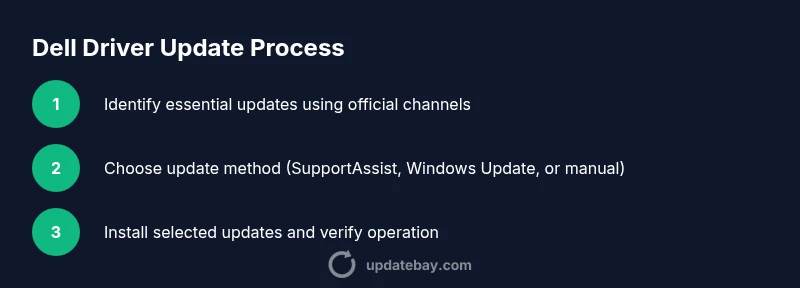
If you want reliable Dell driver updates, this guide walks you through multiple safe methods (SupportAssist, Windows Update, and manual downloads) and gives you a clear, step-by-step process to identify, install, and verify Dell driver updates. By following these steps, you’ll minimize compatibility issues and improve stability for Dell hardware. The keyword to watch for is drivers update dell as you explore official channels.
Why Dell Driver Updates Matter
According to Update Bay, keeping Dell drivers up to date is essential for performance, security, and stability. When users search for reliable results using terms like 'drivers update dell', they often land on official Dell sources and well-reviewed guides. Dell driver updates ensure compatibility with latest Windows features and peripheral devices, reduce risk of hardware conflict, and unlock firmware features that optimize battery life and thermal management. In 2026, the landscape of driver updates has shifted toward centralized management via Dell SupportAssist, Windows Update, and direct downloads from Dell's official site. The Update Bay team found that regular maintenance reduces unexpected crashes and helps new hardware run smoothly. This guide breaks down practical methods to identify, obtain, and install Dell driver updates, along with safety checks and best practices. Whether you manage a single laptop or an enterprise fleet, following a structured approach pays off over time.
How Dell Driver Updates Work
Dell driver updates can come from three primary channels: automatic updates via Windows Update, Dell's own SupportAssist utility, or manual downloads from Dell's official support site. Windows Update is convenient and integrates with system maintenance, but it may lag behind Dell's current drivers for specialized hardware. SupportAssist is Dell’s recommended option for most users because it inventories hardware components, scans for outdated drivers, and guides you through updates. Manual downloads give you direct control with the exact driver version and release notes. Understanding these channels helps you choose the right method for your hardware, whether you're updating a laptop, desktop, or peripheral devices. The aim is to keep chipsets, graphics, network adapters, audio, and firmware aligned with your operating system. Regular checks can prevent compatibility issues after OS updates or software upgrades. For best results, start with SupportAssist or Windows Update and resort to manual downloads only when you need a specific version or the automatic method misses a critical update.
Identify Which Drivers Need Update
Before updating, identify which drivers actually require attention. Start by opening Device Manager and looking for drivers with warning icons or with a Driver Date older than the OS install date. Cross-check your Dell model's support page to confirm the latest recommended drivers for your exact system configuration. Use Dell SupportAssist to run a full scan if you have it installed, which can flag outdated network adapters, graphics, audio, chipset, and firmware. Do not assume every driver needs updating just because an update exists; some manufacturers do not offer newer versions for your specific hardware. Keeping a log of which drivers are updated and when helps you revert quickly if issues arise. Finally, remember that BIOS and firmware updates may appear separately from driver updates, and should be treated with care.
Dell SupportAssist: The Built-In Update Assistant
Dell SupportAssist provides an automated path to staying current with drivers and firmware. If you have SupportAssist installed, run a full system scan, then review the updates list and select the driver packages labeled as important or recommended. The tool will download and install the chosen updates and prompt you when a restart is required. Using SupportAssist reduces guesswork and lowers the risk of installing incompatible software. If SupportAssist reports no updates, your system is likely up to date according to Dell’s database. In rare cases, SupportAssist may miss a driver; in those cases, proceed with Windows Update or manual download from Dell’s site.
Update Dell Drivers via Windows Update
Windows Update often delivers driver updates bundled with system software patches. To use this channel, open Settings > Update & Security > Windows Update and click Check for updates. If a Dell driver is found, Windows will download and install it automatically. This method is best for general stability, and it tends to install broadly compatible versions that work well with most configurations. However, Windows Update updates may lag behind Dell’s latest releases or miss specialized components such as OEM webcam firmware or specific chipset drivers. It’s still a solid default option, especially for non-technical users and in managed corporate environments where policy-based updates are enforced.
Manual Download and Installation from Dell's Support Website
For precise control, manual updates let you pick the exact driver version for your Dell model. Start at Dell’s official support site, enter your service tag or model, and navigate to the Drivers and Downloads section. Download the latest driver package, review the release notes, and follow the installer prompts. In some cases, you may need to install a chipset driver before others; careful sequencing matters for stability. After installation, restart your computer to apply changes. Keep a backup of important files before making changes, and compare the old driver version with the new one to confirm the update took effect.
Troubleshooting Common Driver Update Issues
Driver updates can fail for several reasons, including interrupted downloads, conflicting software, or incomplete system scans. If an update fails, start by rebooting and re-running the scan to ensure you’re applying the correct driver package. Check device status in Device Manager and roll back a recently installed driver if you notice new instability. Ensure you’re using official sources only; avoid third-party sites that may offer tampered executables. For stubborn issues, clean boot the system to reduce software conflicts during installation, then retry the update. If problems persist, capture error codes and consult Dell support resources or Update Bay’s guidelines for safe rollback procedures.
Best Practices for Driver Updates
Plan updates on a scheduled maintenance window when the system is idle to minimize disruption. Always create a system restore point or a full backup before applying driver updates, especially BIOS or firmware changes. Verify the driver version after installation and test essential hardware components (network, audio, graphics, USB peripherals) to confirm proper operation. Prioritize critical security patches and firmware updates that fix known vulnerabilities. Maintain a changelog of driver versions and dates to help diagnose future issues. Finally, rely on official channels—Dell SupportAssist, Windows Update, and Dell’s own download site—to reduce the risk of installing tampered or incompatible software. Update Bay analysis shows that source integrity matters for consistent performance.
Final Recommendations and How Update Bay Can Help
For most users, a layered approach works best: start with Dell SupportAssist for automatic scanning, supplement with Windows Update for general hardware stability, and turn to Dell’s manual downloads only when you need a specific version. The Update Bay team recommends documenting each change, testing after updates, and creating a recovery point in case a driver update introduces instability. Regular maintenance, not occasional fixes, keeps your Dell hardware performing reliably over the life of the device. If you’re unsure, consult Dell’s official resources or ask Update Bay’s specialists for tailored guidance on driver updates and system health in 2026.
Tools & Materials
- Computer with Windows 10/11(Must be connected to the internet)
- Administrative privileges(Run updates with Administrator rights)
- Active internet connection(Wi-Fi or Ethernet connection)
- Dell SupportAssist (optional)(Helps automate driver scans and updates)
- Dell service tag or model information(Needed to locate model-specific drivers)
- Backup drive or cloud backup(Create a restore point or backup before major updates)
- USB drive (optional)(If manual offline installation is needed)
Steps
Estimated time: 60-90 minutes
- 1
Prepare your system
Ensure you have an active internet connection and administrative privileges. Confirm you have the Dell service tag or model handy to locate model-specific drivers. If you can, back up important files and set a system restore point before making changes.
Tip: Create a restore point first so you can revert if a driver update causes issues. - 2
Choose your update path
Decide whether to use Dell SupportAssist, Windows Update, or a manual download from Dell’s site. SupportAssist is simplest for most users; Windows Update works well for general stability; manual download offers precise control over driver versions.
Tip: Start with SupportAssist or Windows Update; use manual downloads only when a specific version is required. - 3
Run a driver scan
Launch the chosen tool and run a full system scan to identify outdated Dell components. Filter results to show only Dell drivers to keep the process focused. Review release notes to understand what each update changes.
Tip: Filter by Dell drivers to avoid unrelated updates and verify compatibility with your OS edition. - 4
Install updates
Select the recommended or critical Dell driver updates and install them. Follow on-screen prompts and avoid interrupting the installation. If a reboot is required, save work and allow the system to restart.
Tip: Review release notes before installing to anticipate any special steps (like chipset prerequisites). - 5
Restart and verify
After the install, restart if prompted and verify driver versions in Device Manager. Test key components (networking, audio, display) to confirm proper operation. If something seems off, roll back the driver from Device Manager.
Tip: Keep a record of current driver versions for quick rollback if needed. - 6
Troubleshoot failures
If updates fail, re-run the scan, retry the installation, or switch to an alternate update path (e.g., manual download). Ensure you’re using official sources and avoid third-party installers. If issues persist, consult Dell support resources or Update Bay guidance.
Tip: A clean boot can help isolate software conflicts during installation.
Frequently Asked Questions
What is the best method to update Dell drivers?
Use Dell SupportAssist for automatic updates when available; if it’s not accessible, Windows Update or manual downloads from Dell’s site are reliable alternatives.
The best method is usually Dell SupportAssist, with Windows Update or manual downloads as backups.
Will driver updates improve my computer's performance?
Driver updates often improve stability and compatibility, which can enhance performance in some scenarios.
Yes, updates can improve stability and performance in many cases.
Should I update BIOS/firmware too?
BIOS/firmware updates are optional but may be recommended for your model in specific situations; follow Dell’s notes and ensure you have a solid backup before proceeding.
Only update BIOS/firmware if Dell recommends it for your model.
What if a driver update causes issues?
If a problem occurs, roll back the driver in Device Manager or use a system restore point to revert to a previous state.
If problems occur, roll back the driver or restore your system.
How often should I check for driver updates?
Check at least monthly, or after major OS updates, using SupportAssist, Windows Update, or the Dell site depending on your preference.
Monthly checks help keep drivers current and secure.
Watch Video
What to Remember
- Assess the update path: SupportAssist, Windows Update, or manual download
- Verify updates against your exact Dell model
- Back up data and create a restore point before updates
- Test essential hardware after updates to confirm stability
- Prefer official sources to ensure driver integrity