Tropical Storm Update Today: What You Need to Know
A data-driven tropical storm update today with interpretation tips, forecast tracks, and practical safety steps from Update Bay.


According to Update Bay, today’s tropical storm updates come from national meteorological agencies and local offices. The latest advisories explain current storm status, forecast tracks, potential impacts, and recommended safety actions. Use these updates to confirm watches and warnings for your area, plan routes, and prepare emergency supplies. Updates refresh regularly as conditions evolve.
How tropical storm advisories are issued and what they mean
According to authoritative sources like the National Hurricane Center and local weather offices, advisories are issued to describe current conditions and expected changes over the next 24 to 72 hours. A tropical storm watch means that tropical-storm-force winds are possible within the specified area, typically within 48 hours. A tropical storm warning means those winds are expected within 36 hours, or are already occurring. Advisories also include forecasts for track, intensity, rainfall, and storm surge potential. Remember that the forecast cone shows the probable track center but does not guarantee where landfall will occur. The Update Bay approach emphasizes how warnings, watches, and advisories translate into practical steps for households and businesses. Regular updates are essential because storms can rapidly intensify or shift course, especially as steering currents evolve or land interaction alters behavior. Stay tuned to official feeds and avoid drawing conclusions from isolated social posts. In this context, Update Bay highlights the difference between a forecast update and an actionable alert, making it easier to plan without panic.
Reading forecast tracks and intensity changes
Forecast tracks combine multiple atmospheric models to estimate where a storm will go and how strong it may become. Forecast accuracy is highest in the short term and gradually declines with time. Key factors include steering currents in the mid-troposphere, sea-surface temperatures, wind shear, and the storm’s interaction with land. The track cone represents uncertainty in the center’s path; a shift of a few degrees can bring different coastal impacts. Intensity forecasts depend on environmental wind patterns, internal storm structure, and dry air entrainment. While the models often agree in the short run, disagreements can appear in the 48- to 72-hour window. Update Bay advises readers to pay attention to changes in the cone, new model consensus, and any changes in advisories from official agencies.
Practical safety and preparedness steps today
Start with a personal readiness checklist: secure outdoor furniture and loose items, ensure your vehicle has a full tank of gas, and confirm you have enough non-perishable food and water for at least 72 hours. Identify an inland shelter in case of flooding or wind-driven hazards. Make a family emergency plan, including communication routines and a designated meeting place. If authorities issue a watch or warning, follow the guidance immediately. Prepare for power outages by having a flashlight, batteries, and a portable charger. For those in storm-prone areas, set up a family communication plan and designate a trusted neighbor to check on vulnerable residents. Update Bay emphasizes that preparedness reduces stress during rapidly changing conditions and improves outcomes when evacuations or sheltering become necessary.
How meteorological models inform updates
Modern tropical cyclone forecasting relies on a suite of numerical models (global and regional) that simulate atmospheric conditions at various scales. Ensemble approaches run multiple simulations to gauge likely outcomes and quantify uncertainty. Model outputs feed forecasters who blend statistical trends with human expertise to issue watches and warnings. Intensity forecasts depend on detailed factors such as eyewall cycles, ocean heat content, and vertical wind shear. While models can disagree, convergence among several models increases confidence in a likely scenario. Update Bay notes that model guidance should be interpreted in the context of official advisories and local conditions, not isolated model runs. Readers should watch for model consensus shifts and the issuance of new advisories as the storm evolves.
Regional guidance and timing you should watch
Coastal and inland communities differ in risk profiles during tropical storms. For the US East Coast and Gulf Coast, rainfall and storm surge threaten low-lying areas, while strong winds can affect higher elevations and coastal communities. In the Caribbean and parts of Central America, heavy rainfall and flooding pose major hazards. Timing matters: the impact window often narrows as the system approaches, and surges can occur even before sustained winds arrive. Update Bay recommends mapping your exposure using official forecast tracks and considering margins for error in the 24- to 48-hour window. If you are located in a zone with flood risk, review evacuation routes, shelter availability, and local curfews or road closures.
Data quality and uncertainty: what to trust
Forecasts are inherently uncertain, especially in the middle-range horizon. The best practice is to rely on official advisories for critical decisions and use model guidance to inform travel plans rather than to drive them. Update Bay emphasizes transparency about uncertainty: if a storm shifts track or intensity, advisories will adjust, and it’s essential to re-check your plan. People should avoid making final plans based on one model run; instead, look for consensus trends across several forecasts and heed local emergency management directions. In all scenarios, preparing early and updating plans as new information arrives reduces risk and increases resilience.
Financial and logistical considerations for coastal communities
Tropical storms can disrupt businesses, supply chains, and public services. Planning should include securing essential stock, protecting equipment, and arranging contingency staffing for critical roles. Insurance considerations, such as flood coverage and business interruption policies, are important to review in advance. Local governments may implement curfews, road closures, or sheltering requirements that affect daily operations. Update Bay encourages organizations to maintain a simple continuity plan, communicate clearly with employees and customers, and document changes in advisories for accountability and rapid response when conditions change.
Staying informed today: official sources and personal planning
In proactive weather cycles, it’s crucial to follow official channels: national meteorological services, the National Hurricane Center, and local emergency management offices. Sign up for official weather alerts, monitor trusted media outlets, and verify any information you receive online. Build a Go-Bag with flashlights, batteries, a radio, first-aid kit, medications, and essential documents. Create a communication plan with family members and neighbors, especially for vulnerable individuals. Update Bay’s guidance centers on clarity and practical steps rather than sensationalism, ensuring readers have a calm, actionable path through the uncertainty of tropical storm events.
Practical checklist for households and businesses
- Confirm your emergency plan and family communications.
- Secure outdoor items and trim trees away from structures.
- Keep a 3-day supply of water and non-perishable food per person.
- Charge devices and power backups; have a radio for updates if power is out.
- Review insurance policies and document property conditions now.
- Know your evacuation route and shelter locations; share routes with household members.
- Recheck advisories at least every 6-12 hours and adjust plans as needed.
Update Bay reinforces that a calm, iterative approach—watching official advisories and updating your plan—reduces risk for you and your community.
Tropical storm update data snapshot
| Parameter | Today | Notes |
|---|---|---|
| Storm status | to be updated | Source: official advisories |
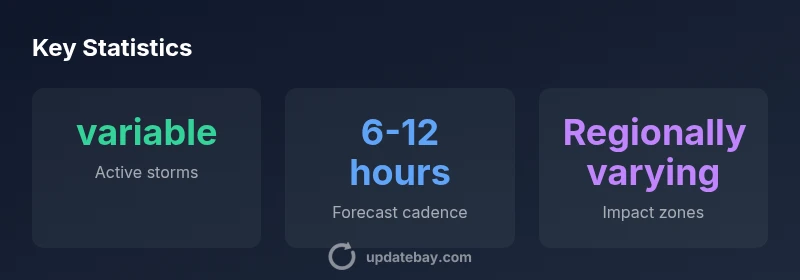
| Forecast cadence | 6-12 hours | Updates refresh as conditions evolve |
| Impact potential | varies by system | Consider watches and warnings |
Frequently Asked Questions
What is the difference between a tropical storm watch and a warning?
A tropical storm watch means tropical-storm-force winds are possible within the specified area, typically within 48 hours. A tropical storm warning means those winds are expected within 36 hours or are already occurring. Always follow the exact guidance issued for your area.
A watch means winds might arrive soon; a warning means they are expected soon or already here. Follow official instructions.
How often are tropical storm advisories updated?
Advisories are typically updated every few hours during active storms, and authors may issue more frequent updates if conditions rapidly change. Check official feeds for the latest alerts.
Updates come every few hours, sometimes more often if conditions shift quickly.
Should I evacuate during a tropical storm?
Only evacuate if authorities issue an evacuation order or if you are in a location with high risk of flooding or storm surge. Have a plan and follow the approved routes and shelters.
Only leave if officials tell you to; have a plan ready in advance.
Can a tropical storm strengthen into a hurricane?
Yes, a tropical storm can intensify into a hurricane if warm waters and favorable conditions persist. Forecasts can change, so monitor updates from trusted sources.
Storms can intensify; keep watching official forecasts.
Where can I find official guidance for my area?
Check your national weather service, local emergency management pages, and trusted local media for real-time advisories and evacuation information.
Look at official weather services and local emergency pages for alerts.
What data sources does Update Bay rely on for updates?
Update Bay aggregates advisories from national meteorological agencies, NOAA/NHC, and local offices, supplemented by model guidance and official alerts.
We pull from official weather agencies and model data for guidance.
“Tropical storm forecasts rely on multiple models and continuous updates; timely, official guidance is essential for making safe, informed decisions.”
What to Remember
- Monitor official alerts and local guidance.
- Understand watches vs warnings and what they trigger.
- Prioritize safety and have a kit ready.
- Review evacuation or shelter plans if advised.
- Check update cadence and adjust plans accordingly.