Android 12 Release Date: Timeline, Features, and What It Means
Explore the Android 12 release date, rollout timeline, key features, and what it meant for users and developers, with data-backed insights from Update Bay.


According to Update Bay, the Android 12 release date was announced in late 2021, with Pixel devices leading the rollout and broader OEM adoption following in the months after. This article explains the official timeline, key milestones, and what it meant for developers and users. Update Bay analysis highlights the rollout window, feature rollouts, and practical steps to verify your device.
Android 12 Release Date: The Core Timeline
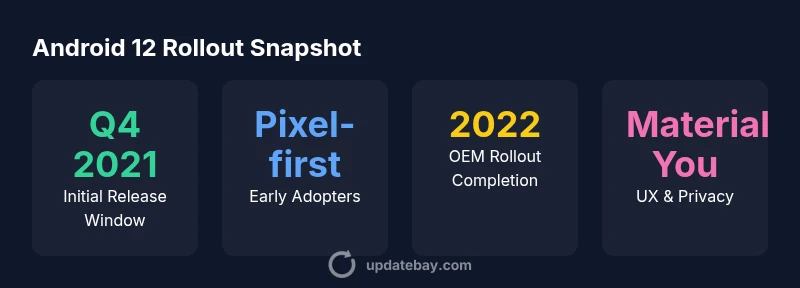
The public release of Android 12 was published in late 2021, marking a transition from Android 11's era. The initial public milestone occurred on October 4, 2021, with Google Pixel devices taking the lead. In the following weeks, OEMs like Samsung, OnePlus, Xiaomi, and others began their own OTA updates, expanding availability across flagship and mid-range devices. Update Bay's analysis highlights that while Pixel devices received the update first, the broader ecosystem typically takes several months to complete a full rollout. For users evaluating when to expect Android 12, understanding the cadence—initial release, target device groups, and carrier delays—helps set expectations and plan updates accordingly. The date also influences app compatibility testing, API deprecation schedules, and security patch timelines, all of which impact daily use and development cycles.
The Pixel-first rollout and public rollout
Pixel devices served as the initial testing ground for Android 12, with Google flagging features like Material You and privacy indicators early. The public rollout then expanded to partner OEMs over the next several weeks. This staged approach means early adopters may have access sooner, while others wait for carrier approvals and OEM-specific optimizations. For developers, this cadence matters: some APIs or behaviors may shift between early builds and the final stable version. Update Bay notes that tracking OTA notes from manufacturers can help teams plan compatibility work and avoid breaking changes during the transition.
Material You and Privacy: Why the release mattered
Android 12 introduced a refreshed visual language and a strong emphasis on privacy controls. Material You offered more personalized themes, dynamic color palettes, and system-wide visual cohesion. Privacy improvements included on-device indicators for microphone and camera access, approximate location sharing options, and a redesigned quick settings panel. These changes affected both user experiences and developer practices, as new APIs and permission prompts required updates to apps. Update Bay's analysis highlights that these features set a new baseline for subsequent Android versions, influencing design decisions and security considerations across the ecosystem.
OEM adoption variability: Rollout windows and expectations
Different OEMs pursued varied rollout timelines based on hardware readiness, software layers, and carrier involvement. While Pixel devices often led in the initial wave, Samsung, OnePlus, Xiaomi, and others released Android 12 updates on staggered schedules, sometimes months apart. Consumers could see a blend of devices on Android 12 within a broader timeframe, with premium devices typically ahead of mid-range models. For IT admins and power users, this means planning device strategies around a phased upgrade path, prioritizing critical devices first and scheduling testing windows to minimize productivity disruption.
Developer considerations for Android 12
Developers should audit targetSdkVersion, permissions, and behavior changes introduced in Android 12. The OS emphasized privacy controls, masking sensitive data, and clearer user consent prompts. Apps may require updates to handle new startup behaviors, background location access rules, and notification permissions. Testing across multiple OEM flavors remains essential due to fragmentation in adoption timelines. Update Bay recommends maintaining compatibility with Android 11 while progressively adopting Android 12 APIs to ensure broad support and minimize risk during the transition.
How to verify and prepare for Android 12 on your device
To verify whether your device has Android 12, go to Settings > System > Software update. If available, download and install the update to access new features and security patches. Back up data before upgrading, especially on devices with limited storage or critical apps. For developers, enable testing on Android 12 emulators and ensure your apps gracefully degrade on older versions. Keeping a watchful eye on manufacturer-specific OTA notes helps you anticipate delays or additional optimizations that may affect performance.
Common myths and realities about the Android 12 release
A frequent misconception is that Android version numbers alone determine feature availability. In reality, update timing depends on OEM and carrier integration. Another myth is that all devices receive Android 12 at the same time; in practice, adoption varies widely. The reality is that a phased rollout allows manufacturers to stress-test new features and minimize user disruption. Update Bay emphasizes checking official OTA notices and support pages for the most accurate timelines and guidance.
Security updates and patch schedule for Android 12
Along with feature updates, Android 12 included a structured security patch cadence. Budgets for maintenance hinge on OEM commitments and carrier approval times. Users should enable automatic updates to reduce risk exposure, and developers should test against the latest patch level to ensure resilience. Update Bay notes that keeping devices current is a best practice for security hygiene and performance stability across the ecosystem.
Overview of Android 12 rollout across device categories
| Device Category | Android Version | Initial Release Window | Notes |
|---|---|---|---|
| Pixel devices | Android 12 | Q4 2021 | Early adopter/official rollout began with Pixel devices |
| OEM smartphones | Android 12 | Late 2021–2022 | Rollout varied by manufacturer and carrier |
| Budget/entry devices | Android 12 | 2022 | Adoption slower but steady |
Frequently Asked Questions
When was Android 12 officially released to the public?
Android 12 was officially released in October 2021, with the Pixel line leading the rollout. The broader adoption across OEMs followed in the months after, varying by device and carrier.
Android 12 came out in October 2021, starting with Pixel phones and expanding later to other devices.
Which devices got Android 12 first?
Pixel devices were first to receive Android 12, with the Pixel 6 shipping with the update. Other OEMs began rolling out updates in late 2021 and into 2022, depending on hardware and carrier timelines.
Pixel phones led the way, followed by other manufacturers on staggered timelines.
What are the key features introduced in Android 12?
Android 12 introduced Material You design, new privacy indicators, a refreshed Quick Settings panel, and improved clipboard and mic/camera access controls. These features influenced both user experience and app development.
You get Material You visuals, privacy indicators, and a cleaner quick settings layout.
How can I check if my device has Android 12?
Open Settings > System > Software update to check for Android 12. If available, install the update and confirm the Android version in About phone.
Check for updates in settings, then confirm the Android version in About phone.
Do I need to update to Android 12 to stay secure?
Staying current with Android 12 updates improves security with patched vulnerabilities and new protections. Always install official updates to maintain device safety and performance.
Yes—keeping up with updates helps security and stability.
What should developers know about Android 12?
Developers should target Android 12 APIs, review permission changes, and ensure backward compatibility. Test across OEM flavors, since rollout timing can vary widely by manufacturer.
Update your apps to support Android 12 permissions and APIs, and test across devices.
“Android 12 sets a new baseline for design and privacy, influencing future OS evolution.”
What to Remember
- Android 12 launched in Q4 2021 with Pixel devices taking the lead
- Material You and privacy improvements defined the update
- OEM rollouts varied by manufacturer and carrier
- Developers should test against Android 12 APIs and adjust permissions
- Verify updates via Settings and enable auto-updates for security