Why Is My Update Not Installing? A Practical Troubleshooting Guide
Struggling with an update that won't install? This urgent, practical guide walks you through common causes, diagnostic flow, and step-by-step fixes to get updates installed safely. Brought to you by Update Bay.


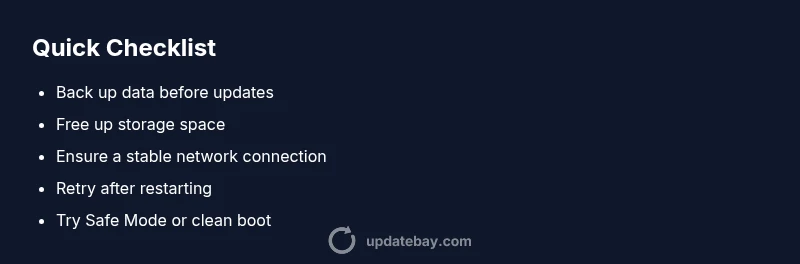
Most updates fail to install because of storage, network, or package problems. Start by freeing space, securing a stable connection, and rebooting. If it still won’t install, retry in Safe Mode or with a manual download from the official source. This quick check typically resolves routine install failures.
Common Causes When Updates Fail to Install
Facing the question "why is my update not installing" starts with understanding the most frequent culprits. In most cases, the failure isn’t the update itself but the environment around it. The top offenders are insufficient storage, an unstable network, or a corrupted or incomplete update package. Other common causes include outdated firmware, software conflicts, antivirus or security settings blocking changes, and user accounts or permissions that prevent writes to the system partition. If you recently added new storage, installed a new security app, or changed network hardware, revisit these areas first. According to Update Bay analyses, these factors account for the majority of routine installation failures across devices and platforms.
Prepare Your Device for an Update
A methodical prep phase reduces friction and protects your data. Start by backing up essential files to cloud storage or an external drive. Make sure your device is plugged in or has reliable power; updates can fail mid‑install if the battery dies. Pause or temporarily disable VPNs or aggressive security software that might interfere with the download stream. Close background apps, especially those that use disk or network resources. If your device has multiple users, switch to an admin account. Finally, verify the date and time are correct, and install any pending system maintenance tasks suggested by the OS.
Check Storage, Network, and System Health
Storage and connectivity are the two most common reasons updates stall. First, confirm there is enough free storage for the update footprint and the temporary files it needs. Next, test your network for stability; if possible, switch from a public Wi‑Fi to a trusted wired or home network. Then review system health indicators: pending restarts, corrupted caches, or stalled background services can derail an install. If you see a specific error message, note it for reference—many manufacturers publish lists mapping error codes to fixes. Here at Update Bay, we have observed that ensuring solid storage and connectivity dramatically reduces install failures.
Diagnostic Flow You Can Follow Right Now
Symptom: The device shows update failed to install with an error code or progress stuck at a percentage. Diagnosis begins by ruling out storage and connectivity, then checks for corrupted update files, and finally examines software conflicts.
- If storage is low: free space and retry.
- If network is unstable: switch networks and retry.
- If error codes point to a package problem: re-download the update file from the official source.
- If issues persist after a clean retry: consider a clean boot or Safe Mode to isolate third‑party software.
If none of these steps fix the problem, proceed to the STEP-BY-STEP guidance below and consider seeking professional help.
Step-by-Step: Fix Common Install Failures
This section provides a practical sequence you can follow to address the most frequent install problems. Start with the simplest fixes and move toward more advanced options if the problem persists. After each step, attempt the update again to verify whether the issue is resolved. If your device runs on battery power, ensure it remains charged throughout the process. The goal is to establish a stable environment with enough resources for the installer to complete.
TIPS & Warnings for Safe Troubleshooting
- pro_tip: Always back up before major updates and ensure power remains connected during the process.
- warning: Do not interrupt the update once it starts; a power loss or force quit can corrupt system files.
- note: Document error codes and steps you took to seek support more efficiently.
- pro_tip: Perform updates during off-peak hours to minimize potential disruption.
When to Seek Help and How Update Bay Can Help
If you have tried all the above steps and still cannot install the update, it may be time to seek expert help. Hardware faults, deep OS corruption, or firmware issues sometimes require professional tools. The Update Bay team can guide you through advanced troubleshooting, verify component health, and help with safe, manufacturer‑recommended repair paths. Persistent update failures may indicate underlying issues that require vendor support or hardware service.
Steps
Estimated time: 60-90 minutes
- 1
Back up important data and prep power
Create a current backup of vital files. Ensure the device is plugged in or has sufficient battery; updates can fail if the power drops mid-install.
Tip: Email or cloud backup adds an extra layer of protection. - 2
Free up storage and clear caches
Delete or move large files you don’t need. Clear app caches that could interfere with the installer’s temporary files.
Tip: A clean cache often resolves misreporting of available space. - 3
Test network stability
Run a speed test and switch to a more reliable network if possible. Pause other downloads to ensure the update can download fully.
Tip: Wired Ethernet can dramatically improve reliability. - 4
Restart and retry the update
Restart the device, then initiate the update again from the official source.
Tip: Closing background apps reduces contention for disk and network resources. - 5
Try Safe Mode / clean boot
Boot into Safe Mode or perform a clean boot to disable third‑party software that might block the install.
Tip: Only essential services run in Safe Mode; retry the update here. - 6
Manual install or network reset
If allowed by the platform, download the update file from the official site and install manually. If network issues persist, reset network settings to default.
Tip: Ensure you’re downloading from the official source to avoid tampered files.
Diagnosis: Device shows update failed to install with error codes or progress stuck
Possible Causes
- highInsufficient storage
- highUnstable or slow internet connection
- mediumCorrupted or incomplete update package
- lowIncorrect date/time settings
- mediumSoftware conflicts or background processes
Fixes
- easyFree up storage and retry the update
- easySwitch to a stable network and pause other downloads
- mediumRe-download the update file from the official source and install again
- easyTry Safe Mode or clean boot to isolate software conflicts
- easyCheck and correct date/time settings, then retry
Frequently Asked Questions
What does it mean when an update fails to install?
An update failure usually indicates an environmental or file issue. It may be due to insufficient storage, network problems, or a corrupted download. Review the common causes and follow the diagnostic flow to fix.
An update failure usually means something in the environment or download is broken; start with storage and network checks.
Why does my device say not enough storage even when I think there’s space?
Sometimes system caches and hidden usage mask free space. Restart the device and re-check storage, then clear caches or delete temporary files to free usable space before retrying.
Sometimes the space reported is hidden; restart and clear caches, then retry.
Should I update in Safe Mode?
Safe Mode runs a minimal set of software and can help isolate issues caused by third‑party apps. If the update installs in Safe Mode, a conflicting program is likely the culprit.
Safe Mode can reveal conflicts by isolating software.
Can I fix this without professional help?
Often you can fix install problems with the steps in this guide: free space, stable connection, Safe Mode, and manual download. If the problem persists, you may need vendor support.
You can usually fix it with these steps, no immediate professional help required.
What should I do if the update still won’t install after trying all steps?
If all steps fail, contact official support and share error codes. Consider factory reset only as a last resort and ensure your data is backed up beforehand.
If nothing works, get official support and back up your data.
Watch Video
What to Remember
- Verify storage and network before updating.
- Use Safe Mode to isolate conflicts.
- Manual installs can bypass app-store issues.
- Back up data to prevent loss.