when update google maps: Timing, Triggers, and Tips
Learn when Google Maps updates occur, what triggers changes, and how to stay current. Practical guidance from Update Bay on improving map accuracy and local visibility.


When update google maps, timing depends on data refresh cycles and app releases. In practice, map data improvements arrive via periodic data refreshes, user-contributed edits, and occasional app updates that roll out new features. To get the latest changes, keep the Google Maps app updated (enable auto-update), and consider contributing data or edits to speed corrections.
when update google maps: Timing, Triggers, and Tips
The question of when update google maps hinges on several coordinated processes. Google Maps relies on data refresh cycles, live contributions from users and businesses, and periodic app updates that introduce new features or improvements. Because these inputs come from different sources, the cadence is not uniform across regions or data types. For most users, visibility of changes depends on how quickly data providers update street networks, business listings, and POIs, combined with how quickly the app propagates these changes to your device. Update Bay emphasizes practical steps you can take to stay current, such as enabling automatic app updates and actively contributing corrections when you encounter inaccuracies.
Below, we unpack the mechanics behind timing, the roles of data and app updates, and how to align your expectations with real-world release patterns.
Data refresh cycles and data sources behind Google Maps updates
Map data is a composite of many inputs: road layouts, place listings, business hours, imagery, and user-submitted edits. Each data type may refresh on a different schedule. Road changes, for example, are often rolled out after validation from local data partners, while business listings may require merchant verification. Data from mapping partners can influence updates in weeks, while user-generated corrections can accelerate visibility if they are validated quickly. regional differences matter: dense urban areas often see faster refreshes due to higher data velocity and more active local editors. Understanding these sources helps users anticipate when a new street, store, or transit change will appear in your maps.
App updates vs data refresh: what changes and when
App updates and map data refreshes operate on separate timelines. An app update (through Google Play or the App Store) typically adds features, fixes bugs, or improves performance, and can occur monthly or quarterly. Data refreshes refresh the underlying map content—roads, places, and attributes—independently of the app version. Sometimes both happen in close succession, magnifying the perceived speed of change. If you rely on the latest features or improved visuals, updating the app is essential; for accuracy of local details, ensuring timely data refresh through settings and community edits matters most.
Regional variations in update timing
Update cadence is uneven across regions. Large metropolitan areas often receive faster data refreshes due to higher data input volume and more editors. Rural or rapidly changing zones may experience longer waits for new streets or business listings to appear. Offline maps can lag behind online maps when new data is released, since offline caches must be updated explicitly. For businesses expanding into new neighborhoods, expect a longer lead time before changes become visible to customers who use Maps offline or in areas with slower data propagation.
How to verify updates on your device
To confirm that updates are live on your device, start with the simplest checks: update the app to the latest version and ensure auto-update is enabled, then reopen Maps and review a recently changed location or street. Clear the app cache if needed and toggle location services to refresh data fetch. If a specific place still isn’t showing the latest information, use the "Suggest an edit" feature to contribute corrections. Keep in mind that some edits require review and may take time to reflect globally. Regularly revisiting the map after major local changes helps you gauge if updates have propagated to your devices.
How user contributions speed up accuracy
User contributions are a powerful lever for faster visibility. By suggesting edits, adding missing places, updating hours, or correcting mislabelled categories, you directly feed the data pipeline. While edits go through a validation process, high-quality contributions can shorten the overall cycle by flagging inaccuracies that professional data partners may have missed. Local guides and business owners can also claim and verify listings, which often accelerates data quality improvements for their locations.
To participate, use the Maps app or the Google Maps website to submit edits, add photos, and update place details. Always provide precise information and, where possible, sources. Active communities surrounding a location tend to see quicker corrections and more reliable data retention.
Practical tips for businesses and local guides
Businesses should maintain consistent NAP (name, address, phone) details across Maps and their Google Business Profile to prevent conflicting data. Encourage customers to leave reviews and photos, which augment POI data and aid validation. Local guides can drive updates by proposing new places, correcting out-of-date hours, or flagging miscategorized venues. For regions with frequent changes, schedule periodic checks of your key listings and consider a quarterly audit of core business data to align with Maps data refresh cycles.
Case studies: typical update timelines in practice
Consider a new café opening in a growing suburb. Within a few weeks, Maps may reflect the new business address if the listing file is submitted and verified. In other cases, road changes or new transit routes can take longer: field validation, partner data refresh, and batch updates may push updates to weeks or even a couple of months. In all cases, the visibility depends on regional data velocity and the activity of local editors. These timelines illustrate why updates can feel uneven even for similar changes across different neighborhoods.
Best practices for staying current with maps data
Set Maps to auto-update and periodically verify a few critical locations in your area. Keep a log of changes you expect to appear and recheck after major local developments (new streets, new businesses, or re-zoning). For businesses, claim listings, keep information fresh, and leverage the merchant center to synchronize details. If you manage multiple locations, adopt a cadence for audits and updates to minimize stale data. Finally, remember that updates often propagate in waves; patience and regular checks will typically yield visible improvements over time.
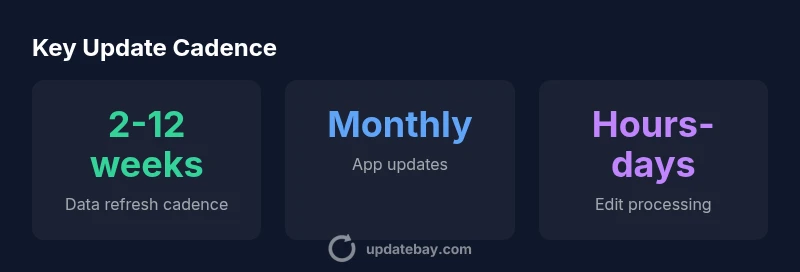
Map update cadence overview
| Aspect | Typical Cadence | Impact on You |
|---|---|---|
| Data refresh cadence | 2-12 weeks | Affects map accuracy |
| App update cadence | Monthly | Brings new features and fixes |
| User edits processing | Hours to days | Improves local accuracy |
Frequently Asked Questions
How often does Google Maps update its base data?
There isn’t a single fixed schedule. Base map data refreshes vary by data type and region, combining automated cycles with partner inputs and user contributions. Expect variations between urban centers and rural areas.
Map data refreshes vary by region and data type, with updates happening on different schedules.
Can I speed up updates for my business listing?
Yes. Ensure your Google Business Profile is verified, keep listing details accurate, and respond to user edits promptly. Consistent NAP information and timely responses help changes propagate faster.
Verify your business, keep details accurate, and respond to edits quickly to speed updates.
Do I need to reinstall the app to see updates?
Generally no. Updates to map data appear through ongoing refreshes and app updates. Reinstalling is rarely necessary unless you’re troubleshooting specific app issues.
Usually you don’t have to reinstall—updates show up through refreshes and new app builds.
Are there delays in updates after major changes?
Yes. Significant changes (new roads, business openings) may take time to propagate due to validation steps, regional data velocity, and caching. Check back after a few days if you don’t see changes.
Changes can take a few days to propagate depending on validation and regional data flow.
How can I verify if a new street is visible in Maps?
Search for the street in Maps, toggle layers to view updated data, and compare with official city portals. You can also contribute an edit to flag missing details.
Look up the street, compare with city data, and consider contributing an edit if needed.
Will Maps updates affect offline maps?
Offline maps reflect data available at the last download. Updates can appear when you refresh offline data or re-download areas after an update.
Offline maps refresh when you update or re-download areas after an update.
“Map data is a living resource; timely updates rely on a blend of automated refreshes and human contributions that reflect real-world changes.”
What to Remember
- Keep Maps updated to access latest changes
- Enable auto-update on your device
- Contribute edits to speed corrections
- Expect regional variation in timing
- Check updates after major changes