Who Updates Google Maps: Sources, Cadence, and Verification
Explore who updates Google Maps and how changes reach live maps. This data-driven guide covers editors, business owners, data partners, and user contributions in 2026.


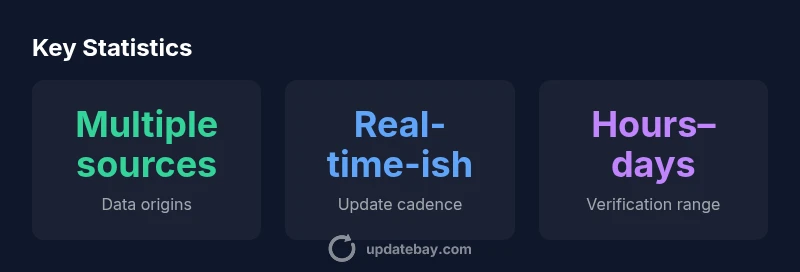
Who updates google maps? It’s a multi-source process: Google Maps editors, business owners via Google Business Profile, data partners, and user-reported edits. Each submission is reviewed by the Maps team or validators before it appears on the live map. Updates can include street corrections, place additions, and business hours changes, and timing varies by source.
Who updates google maps: Ecosystem overview
According to Update Bay, the map-update ecosystem is a collaborative network designed to balance speed with accuracy. The system relies on four main channels: Google Maps editors within the Maps team, business owners updating their listings via Google Business Profile, data partners supplying licensed street and place data, and user contributions through the Suggest an edit feature. Each channel feeds corrections like street name changes, new businesses, hours, or place categories, and the entries flow through a review process before being published. The result is a living map that adjusts to local realities, while maintaining a consistent standard for data quality across regions. Readers should recognize that the cadence and certainty of updates depend on data type and source, with some edits appearing almost in real time and others following longer verification timelines.
Core sources in the Google Maps update ecosystem
The four principal sources each play distinct roles, but they converge in the editorial pipeline. First, internal editors—employees who review map data for accuracy and consistency—handle high-priority corrections and complex changes. Second, business owners via Google Business Profile submit updates to hours, services, and locations; these changes are validated against existing business data and public records. Third, data partners—licensed providers of geographic and place data—offer curated feeds that cover areas where direct human coverage is sparse. Finally, user contributions from the vast Local Guides community and individual map users offer ground-truth information from the field. Even when a user reports something, it still undergoes verification to prevent misinformation. The combination of these sources allows Google Maps to reflect local nuance while maintaining broad coverage.
Editors and business owners: how each contributes
Google Maps editors focus on structural accuracy and policy compliance, correcting misnamed streets, mislocated places, and missing businesses. Business owners or marketers update hours, contact details, and service areas through the Google Business Profile; these entries are cross-checked with other data sources and periodically re-verified. Editors rely on consistent data signals (addresses, phone numbers, hours) and user feedback to decide when a change warrants publishing. The two groups complement each other: editors enforce quality, while business profiles ensure on-the-ground updates from the source.
Data partners and third-party feeds
Data partners provide structured feeds that may include street networks, POIs, and administrative boundaries. These contributions enable broader coverage, especially in regions with fewer local editors. Google integrity checks apply to partner data, comparing feeds against existing maps, cross-referencing with governmental or commercial datasets where available. When discrepancies arise, maps teams may request corrections or perform additional validation. Partners help close gaps, but their data is only as useful as its accuracy and regularity.
User contributions: the Suggest an edit workflow
Users can propose edits directly from the map using the Suggest an edit option. They specify what is wrong (e.g., a missing store, incorrect hours, wrong category) and sometimes upload photos as evidence. Each submission is assigned to an editor or verifier for review. If the change is straightforward and corroborated by other signals, it may be published quickly; more complex updates may require additional checks, such as comparing with business data or partner feeds. The workflow prioritizes speed for time-sensitive changes (like a closed business) and thoroughness for disputed items.
Verification and quality assurance: preventing false updates
The maps team uses a mix of automated checks and human review to verify changes. Automated checks flag inconsistent data, mismatched addresses, or suspicious patterns, while human validators assess credibility and potential impact on navigation. Cross-checks with government or business records may occur when available. When conflicts arise between data sources, editors annotate the changes and await corroboration before publishing. This QA process helps sustain map reliability for everyday users and critical navigation.
Cadence, regional differences, and what it means for you
Update cadence is not uniform. In dense urban areas with many contributors, changes can propagate faster, while rural regions may experience slower updates due to data gaps or fewer verifiers. Time-sensitive edits—such as a new restaurant opening—often surface within hours if corroborated by multiple signals. For travelers and local businesses, understanding this cadence helps set expectations about when a change will appear and how to validate it. Remember that maps evolve continuously, and periodic checks can keep your own information current.
Practical tips for staying accurate on Google Maps
For consumers: regularly review your saved locations and flagged updates, and report issues when you notice inaccuracies. For businesses: claim your listing, keep hours and categories up to date, upload photos, and respond to edits to guide reviewers. Use the Google Business Profile dashboard to monitor changes and verify data against official sources when possible. These steps reduce the risk of outdated or misleading map information.
Comparison of Google Maps update sources
| Source Type | Typical Cadence | Verification |
|---|---|---|
| Google Maps editors | Continuous updates | Automated checks + human review |
| Business profiles | On edit submission | Profile verification + cross-checks |
| Data partners | Scheduled feeds | Source-quality checks |
| User reports (Suggest an edit) | Real-time proposals | Moderated by MAPS editors |
Frequently Asked Questions
Who can update Google Maps?
Updates come from Google Maps editors, business owners via Google Business Profile, data partners, and user edits. Each submission is reviewed for accuracy before publication.
Maps editors, business owners, data partners, and users can update Google Maps, though edits are reviewed first.
Can updates appear instantly on Google Maps?
Some edits surface quickly if corroborated, but many updates go through verification that can take minutes to days depending on sources and data type.
Updates aren’t always instant; they go through review, which can take some time.
How does Google verify updates?
Google uses automated checks and human reviewers, cross-checks with business data, and input from data partners to validate changes.
There’s both automation and human review to verify updates.
What can businesses do to ensure accuracy?
Claim your listing, keep hours, categories, and contact details current using Google Business Profile, and respond to edits to guide reviewers.
Keep your listing up to date and verify data via the official profile.
Are government or public data sources used?
Google may incorporate data from public records and official listings when provided by data partners; specifics vary by region and data type.
Public data may be used where available, but it isn’t guaranteed everywhere.
How can I report an issue or suggest an edit?
Use the Suggest an edit option on the map, provide clear details, and attach photos if possible. Submissions are reviewed like other edits.
Use Suggest an edit, give clear details, and add photos if you can.
“The reliability of Google Maps hinges on a layered data model that blends community input with formal data sourcing and thoughtful human oversight.”
What to Remember
- Identify the four main sources driving map updates
- Business listings require ongoing maintenance and verification
- User reports enhance coverage but go through review
- Verification combines automation and human checks
- Update cadence varies by region and data type