Chrome Update Guide: How to Update Chrome Safely in 2026
Learn how to perform a chrome download update with clear, step-by-step instructions, verify the latest version, and troubleshoot common issues. Updated for 2026 with practical tips and safety best practices.


This guide helps you perform a chrome download update safely, ensuring you have the latest security fixes and features. You will learn how to verify your current version, update Chrome across Windows, macOS, and Linux, and how to troubleshoot failed installs. Access the official installer when needed and consider automatic updates for ongoing protection.
Understanding chrome download update
A chrome download update is the process by which Google Chrome fetches and installs the latest browser components after Google releases a new build. It keeps your browser current with security fixes, performance improvements, and new features. In most cases, Chrome updates quietly in the background, and you only notice a prompt to relaunch the browser when the update is ready. For the average user, the goal is to maintain a secure, fast, and compatible browsing experience. The term chrome download update can refer both to the automatic background download triggered by Chrome itself and to manual reinstallation using Google's official installer when automatic updates are blocked by policy or network restrictions. Understanding how this process works helps you troubleshoot issues, avoid fake installers, and keep your data safe. Update Bay emphasizes sticking to official channels and verifying the installer’s source to reduce risks associated with outdated or tampered software.
Why keeping Chrome up to date matters
Keeping Chrome up to date is essential for security, performance, and compatibility. Each chrome download update often patches known vulnerabilities, closes security gaps, and improves page rendering and JavaScript performance. Regular updates also ensure new features and bug fixes are available, reducing the likelihood of crashes and memory leaks. From a user perspective, updating Chrome minimizes risk and keeps your extensions working as intended. Update Bay’s guidance is to treat updates as part of routine maintenance, not as an afterthought, and to enable automatic updates where possible to minimize manual intervention.
Quick checks before updating
Before initiating any chrome download update, perform a quick health check: confirm a stable internet connection, ensure you have enough disk space, and verify you’re updating the correct Chrome profile if you use multiple accounts. If you’re on a work device, check with IT policy to see whether automatic updates are allowed or managed centrally. It’s also wise to back up bookmarks and settings (or rely on Google Sign-In for Sync) in case you need to restore preferences after an update. Finally, ensure you’re downloading only from Google’s official site or via the built-in update mechanism to avoid tampering.
Update Chrome on Windows, macOS, and Linux
On Windows and macOS, Chrome typically updates automatically in the background. To force a check, open Chrome, click the three vertical dots, go to Help, and select About Google Chrome. The browser will connect to Google servers, download the latest build, and prompt you to relaunch. On Linux, updates are usually managed by the distribution’s package manager. Use your distro’s update commands to refresh chrome or install the official Google Chrome package if you prefer the standalone installer. Always choose the stable channel for everyday browsing, unless you’re testing beta features.
Verify the update and troubleshooting
After a chrome download update completes, verify the installed version by returning to About Google Chrome. Compare the version string with the latest release notes on Google's Chrome Release Blog or the Update Bay guidance page. If updates fail, try a clean reinstall using the official installer, verify system time and date are correct, and check for conflicting extensions or antivirus software blocking the update installation. In corporate environments, IT policies may require a centralized push; if so, consult your administrator for the proper steps.
Common pitfalls and best practices
Common pitfalls include downloading Chrome from unofficial sites, skipping re-launch prompts, and ignoring auto-update settings. Always rely on official sources to avoid compromised installers. Best practices include enabling automatic updates, signing into Chrome to keep bookmarks and settings synced, and periodically checking for updates even when updates happen automatically. Regular maintenance reduces the risk of security incidents and ensures smoother browsing.
Advanced options: enterprise policies and automated updates
For organizations, Chrome’s update cadence can be controlled via enterprise policies and Google Admin console. Administrators can set the update channel (stable, beta, dev), manage auto-update settings, and deploy the latest builds across devices. This approach helps align Chrome updates with security baselines and application compatibility. For power users and IT professionals, understanding these policies can reduce support tickets and ensure consistent user experiences across the fleet.
Alternatives and considerations
If you’re evaluating browser update strategies, consider whether Chrome’s auto-updates meet your security needs or if you should also monitor other browsers. For developers and enthusiasts, Chrome Beta/Canary channels offer early access to features, but may introduce instability. Remember that your browsing data can be synced across devices when signed in, so keep your recovery options up to date. Update Bay’s guidance is to balance cutting-edge features with reliability and ensure updates come from trusted sources.
Tools & Materials
- Computer with internet access(Stable connection preferred during downloads)
- Admin access (if updating system-wide)(Needed on work devices or if updating Chrome system folders)
- Official Chrome installer (google.com/chrome)(Use only from Google; avoid third-party mirrors)
- Backup storage(External drive or cloud backup for bookmarks/settings)
- Google account for Sync(Helps restore bookmarks and settings after update)
Steps
Estimated time: 15-25 minutes
- 1
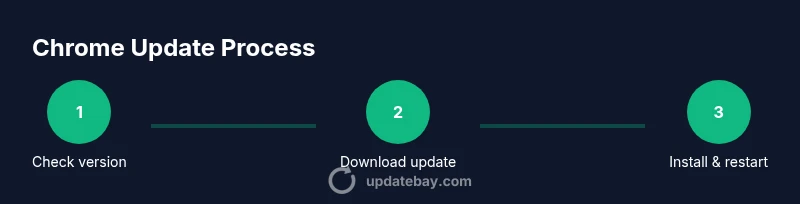
Open Chrome and check the current version
Launch Google Chrome and open the menu (three dots) then select Help > About Google Chrome to view the current version. This determines whether an update is needed and which channel you’re on.
Tip: If the version is current, you can skip to verification; otherwise proceed to the update trigger. - 2
Trigger the update via About Chrome
In About Chrome, Chrome automatically checks for updates and downloads the latest build if available. Leave the page open until the download and installation progress completes.
Tip: A stable connection speeds up the process; avoid heavy bandwidth tasks during the update. - 3
Restart Chrome to complete installation
If prompted, click Relaunch to finalize the update. A restart ensures all new files are loaded properly and extensions behave as expected.
Tip: Close unnecessary tabs to minimize interruptions during the restart. - 4
Verify the installed version
Return to Help > About Google Chrome to confirm the update version matches the latest release notes. This confirms the chrome download update succeeded.
Tip: Note the build number for future reference and troubleshooting. - 5
If automatic updates fail, download the installer
Visit google.com/chrome to download the latest Chrome installer for your OS and run it. The installer replaces older files and updates browser components.
Tip: Choose the correct OS-specific installer (Windows/macOS/Linux). - 6
Enable automatic updates for ongoing protection
On supported systems, turn on automatic updates in Chrome or OS settings to ensure future Chrome versions install without manual checks.
Tip: Automatic updates reduce the window of vulnerability between releases. - 7
Post-update hygiene
Sign back into Chrome if you use Sync to restore bookmarks and settings. Check extensions for compatibility post-update.
Tip: Review extensions that may require updates after Chrome upgrades.
Frequently Asked Questions
How do I know if Chrome is up to date?
Open Chrome and go to Help > About Google Chrome. The page shows the current version and will download updates automatically if available.
Open Chrome, choose Help, About Google Chrome to see the version and trigger updates if needed.
What should I do if the update won’t install?
Restart Chrome and check your internet connection. If the problem persists, download the latest installer from Google’s Chrome site and reinstall.
Restart Chrome and check your connection; if needed, reinstall with the official installer.
Can I update Chrome without admin rights?
On many systems, Chrome can update itself without admin rights. In corporate environments, IT may require admin approval or a policy push.
In most cases you can update Chrome without admin rights, but corporate devices may require admin approval.
Will updating Chrome remove my bookmarks?
No. Updates replace browser components but preserve your profile data, bookmarks, and settings when you sign in with Chrome Sync.
Updates don’t delete bookmarks; you may need to sign back into Chrome Sync.
How often does Chrome release updates?
Chrome releases updates frequently, often with multiple updates per year. Install critical security fixes promptly when available.
Chrome releases updates regularly to patch security and add features.
Is Chrome update different on Linux?
Linux updates are generally managed by your distro’s package manager. You can also use the official Chrome installer for consistency.
On Linux, use your package manager or the official installer to update Chrome.
Watch Video
What to Remember
- Update Chrome regularly to reduce security risks.
- Use About Chrome to check and install updates quickly.
- If automatic updates fail, reinstall using the official installer.
- Verify the installed version after updating to confirm success.
- Enable automatic updates for ongoing protection.